20 April, 2008

A CURRICULUM DESIGN IN LANGUAGE COMPUTING


national seminar on
current trends in language teaching
organised by
Southern Regional Language Center,
Central Institute of Indian languages,
Manasagangothri, Mysore
at Vivekanda College for Women,
Idayampalayam,Namakkal,Tamil Nadu
on 4th and 5th March २००८

A CURRICULUM DESIGN IN LANGUAGE COMPUTING
FOR LANGUAGE STUDENTS
Dr.Mahesh Mangalat,
Department of Malayalam, M.G. Govt. Arts College, MAHE. 673 310
U.T. of Puducherry

In this seminar on CURRENT TRENDS IN LANGUAGE TEACHING, I begin my presentation by pointing out some challenges that currently language as a subject encounter at secondary level and in university system। Some of the educational planners are of the view that the content of language curriculum requires a through revamping, so that the focus of it can be shifted to acquiring skills like reading, writing, communication and comprehension. Traditionally literary works have been extensively used in language curriculum to give students an impression on the heritage of their language. Texts taken from ancient period to present day writings were used for this purpose. At university level, the situation is more bleak. The dominant idea is that there is no need for first language and second language at undergraduate level, as the students would have acquired the language related skills from schools and at higher Secondary level. Another challenge is for the Board of Studies in languages. University Grants Commission, while giving model curriculum for diverse courses at undergraduate level, has suggested that there should be at least two modules devoted to computer related content in each major.

Technology and HumanitiesHere the problem is that what should be the content for Computer related modules in humanities and especially in languages। This question arises mainly due to the perception that humanities as such, and languages, especially have nothing to do with technology. Such a perception is some what justified by naming and renaming of courses. If you browse through the courses offered at under graduate level, at various colleges, you will definitely come across a course by name Fashion Technology.This is an offshoot of erstwhile Home Science. This subjects deals with dress making. Of course, dress making is an activity that involves Technology. However, this course deals with diverse designs for dress and various types of materials used for dress making. It seldom cares the technology part of the whole business. Another course that bears technology in their very name is Education Technology. It is nothing but the B.Ed and T.T.C courses, appearing in new name. It is play with nomenclature. I do not have any idea about the technology that they are talking about. The general perception is strengthened by such kind of play with names.

Language and Technology
It is in such a situation that we think about having course content in Language Computing for Language Students।The question here is whether language has any connection to computing? Or does it have any connection to any kind of technology for that matter? Such a question is important, as language and technology are domains which would seem to operate in a way that has nothing in common. Language is a means for articulating ideas. It makes abstract ideas into concrete, so that it can be transmitted, either orally or graphically. Where as. Technology is something which makes physical tools for our use, based on scientific principles or theories. It is an area of precision, scientific testing and constant improvement. Language itself is an abstract entity. This abstract and concrete categories makes them stand apart. However when we analyse it further, we can see that both language and technology are sharing a common level at its operations. Both these are means for making abstract ideas in to concrete, transmittable, usable and with a definite shape. Without making it concrete, these ideas do not seems to exist.

Language Technology
When we look at the history of language, we can see the development of language based communication was the result of the technology that it has been used। Initially, language was only spoken. Only the person/persons in proximity could be reached through oral communication. Then came the technology of sharp granite piece or chisel, which let us leave a message, and a way that we could communicate without our physical presence. Scripts developed and took its shape, to be precise, by the diverse use of tools that were used for scribbling. Then came the technology of loud speakers, radio, television and computers. In each and every stage, language did shape, according to the technology. But when we talk about language technology, we talk about the language part of Information technology. No information can be transmitted, stored or retrieved without the help of language. You require some language to communicate with others. This rule is applicable to Information Technology also. Information Technology is that part of computer Technology that deals with gathering data, processing it and making information systems. As said earlier, language is a basic prerequisite for the whole business. Which language is being used, is not an important issue.

Language Technology and its DomainLanguage Technology has various kinds of application areas, ranging from making plain texts to high level application such as Text to Speech or Speech to Text application. A Text to Speech application lets you to input a text to a computer and the computer reads it out for you. Like wise a Speech to Text application lets you to speak using a microphone to the computer and the computer makes that speech a text. It is possible to have voice controlled enquiry terminals at Railway station, where you can just ask to a computer, as you would normally do to the personnel at the enquiry counter. Such application softwares are being developed for many languages, including Indian Languages. But in Indian Languages, the progress and the result that we have made is little. My point is that Language Technology is not just a fashionable coinage like Fashion Technology or Education Technology. All the application softwares developed for language related tasks are generally called as Language Technology products.
Language Technology: Whose Subject?As we have seen there exists an area of brisk activity around the world, as Language Technology। But in India, this subject is not being taught either at any Technical institution or at Language Study Centers. If you look at the Information Technology syllabus of any University or any such institution, for that matter, you will not see Language Technology figuring in their curriculum. Now, check the syllabus for any Language major course of any university, in India; there again you will not find a reference on this subject matter. Now, whose subject is this? This is the question.

Pondicherry University ModelThis was the question we addressed while restructuring the curriculum for Malayalam Major at Undergraduate level, at Pondicherry University। Prof.Vasundhra Radhakrishnan, who is no more now, was the Chairperson of the Board of Studies. I was a member in it. Along with courses in Media Studies, such as Writing for Print Media and Writing for Visual Media, we have introduced a course by name. An Introduction to Malayalam Softwares. It was in 1999. Madam is no more, and I am not a member in the Board of Studies, now. The Curriculum design that I proposed remain unchanged, even though it require an updating, at least. Let me tell that, the Microsoft Website for Indian Language Computing, www.bhashaindia.com has called this curriculum design as a Revolution in the History of Indian Universities.

Designing a Course for Language StudentsWhat should be the course content for language students, when you introduce a course other than that related to literature or grammar is a relevant one, as it is most likely that literature students would seldom have an exposure to technology. This was one problem that we encountered while conducting the courses in Visual Media and that on Malayalam Computing. Another problem is that if the task of designing a course to language students is assigned to Computer Science specialists, they would prescribe things which does not bear any relevance to the learners. I know an example of Calicut University, where computer science people were asked to design two courses for Post Graduate students in East Asian Studies. They got a syllabus including C++, Jawa and all sorts of such things, which they have no use at all. We need not have to blame the Computer Science specialists who framed the syllabus. They did what they thought correct with regard to their subject. But when we have an area of activity that is depended on our subject matter, here it is language, we have to consider it, above anything else.
Language Use on Computers
Language use on computers have multiples levels of operation, as I mentioned earlier. Apart from the simple text editing to pre-press work. Web publishing, Blogging.Chating etc are language related operations required for all sections of people in society. A student who study computer related modules as part of his course should be conversant with these types of activities. Apart from that, presentations can be made easily using computers.
Let us now confine our computer related module in one semester. Normal duration of a semester is 90 teaching days, out of which, effective teaching days that we get would be somewhere between 75 to 80. In that case a course need to be completed within a minimum of 75 days and a maximum of 90 days. This course require practicals, hands on training. We have to earmark one third of the total available hours for practicals. So the teaching hours that we get would be 50 hours. When we divide this 50 hours to ten units of theory class, we get 5 hours for one unit.
Now, the task is to plan content for these 5X10 hours। A basic knowledge about the computer hardwares and how these hardware components work should be known to the students. Normally Computer Fundamentals course of IT students cover this content. Relevant matter can be taken from it. The common task that a language student has to do with computers is text editing. Text editing applications can be introduced in the Second unit. Various Text Formats and formatting tools need to be introduced to them. Desk Top Publishing is another subject that has to be taught. All these contents are based on English, the default language of most computers. Since we are planning curriculum for Indian Language students, we have to teach them how to configure their system to input and work with an Indian language. At this point we encounter issues with regard to encoding. ASCII, acronym for American Standard Code for Information Interchange, was the encoding used as an International Standard. Now it is being changed to Unicode encoding. All the popular DTP applications supports only ASCII encoding. Where as Bloggs and Web pages support Unicode encoding. So these two encodings should be familiar to a student of Indian language computing. And, the student should learn to configure the computer to use both these encoding standards. Likewise popular applications used for editing graphics, sound and video files should be introduced, even though these does not directly come under language computing. These applications are essential for an effective use of computers.

Internet and Web Content in Indian Languages
Informations are freely accessed through internet. A precondition with regard to it is that the information should be there in some web pages. Till recently, Indian language content on web were using a special kind of fonts known as Web fonts or Dynamic fonts. Since these fonts are following ASCII encoding and that work as an overlay on ASCII environment /browsers would not be able to search that content. This limitation is now overcome by means of Unicode encoded fonts. What is required
now is to create web content related to our land, language, culture, history etc। Unless there is web content, web search would not show any result. It is the need of the hour. Indian language students are the best available resource that can be utilized for this task. Assignments and projects can be incorporated to the curriculum to make students well versed with the technology and its tools for creation of web content. Let me conclude this presentation with a request to you all to give some training to your students to use computers and especially their mother tongue on computers.
Dr। Mahesh Mangalat, Lecturer (Selection Grade) in Malayalam,
Mahatma Gandhi Government Arts College, Mahe.
Tel: 91-490-2334697 Cell: 0-94470-34697 e-mail: mangalat@yahoo.com

13 January, 2008

മാഹി കോളേജ് പൂര്‍വ്വവിദ്യാര്‍ത്ഥി സംഘടന

മയ്യഴി മഹാത്മാഗാന്ധി ഗവ. കോളേജിലെ പൂര്‍വ്വവിദ്യാര്‍ത്ഥി സംഘടന കഴിഞ്ഞ കുറച്ചു കാലമായി നിര്‍ജ്ജീവമായിരിക്കയായിരുന്നു. ഇപ്പോഴത്തെ ഭാരവാഹികള്‍ സംഘടനയ്ക്ക് പുതുജീവന്‍ നല്കാനും പുതിയ സാരഥികളെ കണ്ടെത്താനുമുള്ള ശ്രമത്തിലാണ്. ഇക്കഴിഞ്ഞ ദിവസം മയ്യഴിയിലെ അലിയാന്‍സ് ഫ്രാന്‍സേസിലും ഇന്ന് മാഹി കോപ്പറേറ്റീവ് ബാങ്ക് ഓഡിറ്റോറിയത്തിലും ഇതിനായി യോഗം ചേരുകയുണ്ടായി. മയ്യഴിയുടെ പൊതുജീവിതത്തില്‍ സജീവമായി പ്രവര്‍ത്തിക്കുന്നവരെല്ലാം സന്നിഹിതരായ ഇന്നത്തെ യോഗത്തില്‍ വിവരം അറിഞ്ഞ് വിദേശത്ത് ജോലി ചെയ്യുന്ന മൂന്നു പേരും എത്തിയിരുന്നു.

ഇന്നത്തെ യോഗത്തില്‍ പങ്കെടുത്ത ഒന്നാമത്തെ ബാച്ചിലെ വിദ്യാര്‍ത്ഥിയായിരുന്ന പവിത്രന്‍ മുതല്‍ ഇക്കഴിഞ്ഞ വര്‍ഷം കോഴ്സു കഴിഞ്ഞിറങ്ങിയ അന്‍സില്‍ അരവിന്ദ് വരെയുള്ള എല്ലാവരും കോളേജ് ജീവിതകാലത്തെ ഓര്‍മ്മകളില്‍ ആഹ്ലാദഭരിതരായിരുന്നു. തങ്ങള്‍ക്ക് പരിചയമുള്ള സമകാലികരായിരുന്നവരെയെല്ലാം ഉള്‍ക്കൊള്ളിച്ച് സജീവവും അര്‍ത്ഥപൂര്‍ണ്ണവുമായ പൂര്‍വ്വവിദ്യാര്‍ത്ഥിസംഘടന രൂപീകരിക്കാന്‍ നിശ്ചയിച്ചുകൊണ്ടാണ് യോഗനടപടികള്‍ പുരോഗമിച്ചത്.

കോളേജിലെ പൂര്‍വ്വവിദ്യാര്‍ത്ഥികളില്‍ പൊതുജീവിതത്തില്‍ ഉന്നതമായ സ്ഥാനത്ത് എത്തിച്ചേര്‍ന്നവര്‍ക്ക് സ്വീകരണം നല്കിക്കൊണ്ട് ഫെബ്രവരിമാസം 16ന് വിപുലമായ പൂര്‍വ്വവിദ്യാര്‍ത്ഥിസംഗമം ചാലക്കരയിലെ കോളേജ് ഗ്രൌണ്ടില്‍ ചേരാന്‍ നിശ്ചയിച്ചിരിക്കുന്നു. പ്രസ്തുതയോഗത്തില്‍ കേരളസംസ്ഥാന ആഭ്യന്തരവകുപ്പ് മന്ത്രി ശ്രീ. കോടിയേരി ബാലകൃഷ്ണന്‍, മദിരാശി ഹൈക്കോടതി ജഡ്ജിയായി നിയമിതനായ ജസ്റ്റിസ് കെ.കെ.ശശിധരന്‍, മയ്യഴി മുനിസിപ്പല്‍ കോര്‍പ്പറേഷന്‍ ചെയര്‍മാന്‍ ശ്രി. രമേശ് പറമ്പത്ത് എന്നിവര്‍ പങ്കെടുക്കാമെന്ന് അറിയിച്ചിട്ടുണ്ട്.

പൊതുജീവിതത്തിന്റെ വ്യത്യസ്തമണ്ഡലങ്ങളില്‍ പ്രവര്‍ത്തിക്കുന്ന പൂര്‍വ്വവിദ്യാര്‍ത്ഥികളിലേക്ക് ഇതിന്റെ സന്ദേശം എത്തിക്കാനാണ് ഒരു ഇടവേളയ്ക്ക് ശേഷം ഞാന്‍ ഈ പോസ്റ്റ് തയ്യാറാക്കുന്നത്. പൂര്‍വ്വവിദ്യാര്‍ത്ഥിസംഘടനയുടെ വെബ് സൈറ്റ് നിര്‍മ്മിക്കാന്‍ തീരുമാനിച്ചിട്ടുണ്ട്.

താങ്കള്‍ മയ്യഴി മഹാത്മാഗാന്ധി ഗവ കോളേജിലെ പൂര്‍വ്വവിദ്യാര്‍ത്ഥിയാണെങ്കില്‍, അല്ലെങ്കില്‍ പൂര്‍വ്വവിദ്യാര്‍ത്ഥികളില്‍ ആരെയെങ്കിലും പരിചയമുണ്ടെങ്കില്‍ ഈ വിവരം അവരുടെ ശ്രദ്ധയില്‍ പെടുത്തുക. സംഘടനയുടെ ഇപ്പോഴത്തെ ഭാരവാഹികള്‍ :
പ്രസിഡന്റ് : ശ്രീ.സി.എച്ച്.പ്രഭാകരന്‍
സെക്രട്ടറി : അഡ്വക്കറ്റ് എം.സിദ്ധാര്‍ത്ഥന്‍
ട്രഷറര്‍ : ശ്രി.കെ.കെ.രാജീവന്‍ തുടങ്ങിയവരാണ്.
പൂര്‍വ്വവിദ്യാര്‍ത്ഥിസംഘടനയുമായി ബന്ധപ്പെടാന്‍ ആഗ്രഹിക്കുന്നവര്‍ ഈ പോസ്റ്റിന് സ്വന്തം വിലാസം അടക്കം കമന്റിടുക.അല്ലെങ്കില്‍ mggacollege@yahoo.com എന്ന വിലാസത്തില്‍ മെയില്‍ ചെയ്യുക.

14 June, 2007

നാടുഗദ്ദികയെക്കുറിച്ച്

Representation, Ideology and Praxis:
Reflections on Reformed Versions of Naadu Gadhika


Dr.Mahesh Mangalat


The leftist movements, unlike the other political outfits in India, have generally been found to evaluate and make plans for actions in the realms of art and literature. Right from the time of the nationalist movement, cultural intervention have been an indispensable part of the left political practice. Minoo. R. Masani, who wrote the history of the Communist Party of India, acknowledges this gamut of activity. He goes on to record that the Progressive Literature Movement was started in 1936 as a result of the advise to take part in the nationalist movement by mobilising writers and artists. Kerala unit of Progressive Literature Movement was established in 1937. Since then, the left oriented cultural action has played a major role in the formulation of the ideological firmament for political practice. Theatre has been a major area of leftist cultural action ever since the inception of Progressive Literature Movement in Kerala.
The first model of its drama related activity came from the communist ideologue, K. Damodaran, in the early thirties. This was followed by innumerable theatre productions by Thoppil Bhasi, S.L.Puram Sadanandan, P.J.Antony etc. In the long history of such theatre activities the play Naddu Gaddhika, written and directed by K.J.Baby occupies a unique position.
Naadu Gaddhika, unlike other political plays in Malayalam, has three distinctive versions. Out of which, two are printed versions. The first printed version came out in 1983 (Mulberry publications, Kozhikode) and the second one in 1993 (Gadhika Publications, Nadavayal, Wynad). The popular version of the play was that performed by Wynad Samskarika Samithy during 1978-81. Apart from these there is another version of the play by name Apoorna, written and produced in 1977.
The play Apoorna, presented the story of a tribal old man Yaachan and his family. Yaachan has been working for the land lord and now he has to go begging for a living. Of his three children Velli is blind. The second son Lakshmanan goes aloof after his schooling. The third one is a girl, Vella, who is deflowered from the lord’s estate and later on forced to take herself to streets for her living. This play attempts to present the condition of the tribals in general and intend to elucidate the modes of exploitation that they are subjected to. Apoorna was staged in proscenium theatre following the theatrical conventions of social plays in Malayalam.
The play Apoorna took shape of Naadu Gadhika in 1978. The period 1975 to 1977 was an interlude in the political history of India marked by internal emergency. The mainstream political outfits could not respond to the curtailment of civil and democratic rights of citizens. Among the mainstream communist parties CPI was complicit in sharing attitudes of congress, and was a part of the political alliance led by the congress at centre and in Kerala. CPI(M) was more or less inactive as it could not raise any voice of protest effectively. CPI(ML) was an underground organisation, propagating armed struggle against oppressors. The emergency prompted the CPI (ML) to think about Indian democratic set up in a more realistic way. They understood that Indian democracy provides enough space to offer for the spread of ideas and critical evaluation. This space, they thought, has to be effectively utilsed. Janakeeya Samskarika Samithy (meaning Peoples’ Cultural Forum) was formed in the light of the above said evaluation, to propagate their ideology. The apathy of the mainstream Communist Parties had encouraged the general populace of Kerala to get closer to CPI (ML). During the emergency, CPI (ML) was active with all the resources at their disposal. They attacked a police camp at Kayanna, in Kozhikode district and seized arms and ammunition. It had to face the most repressive measures from the government. Though Janakeeya Samskarika Vedi was a cultural front sponsored and promoted by CPI (ML), the general public did not differentiate the party and Janakeeya Samskarika Vedi.
Naadu Gadhika was presented under the banner of Janakeeya Samskarika Vedi. Needless to say, the play was an agitprop.
Gadhika is a ritual prevalent among the tribal society in Wynad. The ritual is intended to exorcise a person of evil forces in him. Tribals in Wynad extended this ritualistic practice to exorcise society as well, when they feel that it is infected with some malaise. This is called Naadu Gadhika.
The play Naadu Gadhika stands unequalled in the history of political theater in Kerala, as it is devoid of all dramatic conventions of proscenium theatre and its procedural alignments of author, actor, space and audience and was an exceptional production in terms of locating a community in the transformed political terrains of Kerala. The author took only the characters and a narrative outline from his earlier play Apoorna. The earlier version can be viewed as politically neutral, where as Naadu Gadhika is a political play, where we see the tribal society rise from shackles, upholding the ideology of liberation. Another significant point is that the characters Yaachan and his family members and other tribals were presented by tribals themselves.
In the reformed form, Naadu Gadhika is a dramatic manifestation of liberation struggle of the tribal community. The structure of the play is determined by the paradigm of the rituals and beliefs of the tribal society. The play communicates more through an episodic structure than through a linier narrative. The language stands on par with the conversational slang of tribals. Only two characters in the play, Thampuran, the landlord and the Gadhikakkaran (the person who perform Gaddhika) only use Malayalam for their dialogues.
Thampuran, the landlord represents the exploiting class. He perpetuates power structure, thereby deny the oppressed class opportunities for freedom. Gadhikakkaran is positioned against landlord. He is a messenger who brings in new aspirations for liberation of exploited class, the tribal society. At one point of time, the Gadhikakkaran is murdered by the guards of Thampuran. But they could only destroy his body and his spirits lingers on. Through a ritual, tribals imbibe this spirit and goes on warpath and annihilates the class enemy. The play culminates when the tribals join together and declares freedom from oppression.
Though the play Naadu Gadhika propagates the Marxian politics of class struggle, the mainstream leftists took a hostile and intolerant stance towards it. The CPI (M) led government was in power when Naadu Gadhika was touring the villages in Kerala. Government banned the play and arrested the artists. The tribal girls who acted in the play were sent to borstal school in the pretext that they are minors. CPI (M) activists have also made several attempts to stop the performance, with the help of Police. An interesting fact in this regard is that the same rule and provisions which were once used by erstwhile Travancore government against communist Party were used against Naadu Gadhika team by the CPI (M) led government. Despite all these the play had been staged at about 330 venues in Kerala, enjoying the position of a work that was instrumental in bringing about a modernist political sensibility.
During the Post Emergency period there were a lot of debates taking place in the CPI (ML) with regard to the primacy of cultural front. The play performances and other such activities in the realm of art and literature helped to widen the mass base of the party. It was at that a local money lender, Madathil Mathai was annihilated by CPI (ML) activists in Kenichira, Wynad. The writers and cultural activists aligning themselves with Janakeeya Samskarika Vedi denounced this act and called it as one that quite unbecoming of a civilized society. Performance of Naadu Gadhika was terminated even before Kenichira incident.
Kenichira incident and the disintegration of CPI (ML) and dissolution of Samskarika Vedi created a mixed response among the sympathizers and activists of the movement. Consequent upon this came in many enquiries into the ideology and praxis of leftist movements. New left thought occupied a prominent position in these enquiries. As there is no movement for them to identify, they themselves initiated movements to organize marginalized sections of the society. Today the majority of feminist and environmentalist activists are people with ideological alignment with the erstwhile Janakeeya Samskarika Vedi. The author of the play Naadu Gadhika, K.J. Baby started a school for tribal children in Wynad. It is an informal, residential school, where the syllabus they follow is that prescribed by the CBSE.
Baby reworked the play in the changed political scenario. The third version of Naadu Gadhika was the result of a reformation took place in the life of the author. Significant about this version is that it follows the procedural alignments that he worked out in the agitprop version of the play. Narrative structure was almost kept unchanged. The subjugation of the tribal society is presented as in the earlier version. The change he made in this version is in the ideology of the play. The myths of tribal community replaced the class struggle based ideology.
According to the myths of the tribal community in Wynad, they belong to the lineage of Maveli/Mahabali, a pagan king. Rule of Mahabali was a matter of envy to the gods in heaven. The tribals living in such an enviable position were enslaved later on. There is another myth of Melorachan and Keeyoaruthi, explaining how the tribals became slaves of landlords. Both these myths upholds a vision of life in perfect harmony with nature devoid of any kind of exploitation.
In the third version of Naadu Gadhika, the Gadhikakkaran reminds them of the myths of Maveli and that of Melorachan and Keeyoruthi. They are constantly reminded of their forefathers dream to go to Kanavu Mala (meaning The Mountain of Dream), in each and every episodes of their history of subjugation. In this version also Gadhikakkaran is killed by the guards of Thampuran. As in the earlier version the spirit of Gadhikakkaran keeps on communicating with the tribals. One among the tribals dons the red cloth that Gadhikakkaran used and leads them to Kanavu Mala, their promised land. There ends the play. Before embarking on the journey to Kanavumala, they invite all to join them in the journey to a land where there no oppressors, exploitation and all live in perfect harmony with each other and with nature, as well.
Departing from the earlier ideological position of class struggle politics, the third version upholds a philosophy of Green Politics. The third version of the play was performed at a few venues and it evoked bitter criticism from the old comrades and sympathizers of Janakeeya Samskarika Vedi. Some of them even challenged the authority of the author to appropriate a text that forms a part of the history of Janakeeya Samskarika Vedi and that of CPI (ML). The presently available version in print is a result of compromise that the author made with the critics.
The history of political theatre in Malayalam gives us as many instances where certain parts of the text is modified in production to suit the situation in which the performance is made. There will be certain sequences which provide ample scope for such kind of improvisation. But when it comes to the question of text of the play, the authentic authorial discourse is final, the singular entity.
In this context, it is noteworthy that the play Naadu Gadhika is a stark reminder of the integral relationship that exists between the text and politics within the context of Drama. The reformed versions of the play Naadu Gadhika challenge the sacred position of the text that too with a political content. When the political context that gave shape to the play gets outdated or transformed, the play also becomes a textual discourse devoid of any political relevance. It becomes more of an archival piece that could merely signify a kind of nostalgia for a heroic past. In the case of political theatre canonical text would only serve a reactionary or self defeatist purpose in the society. Naadu Gadhika may be regarded as a model political play that succeeds in organically living up to the changing political reality.


International Seminar on Politics and Theatre,
Third Annual Conference of Indian Society for Theatre Research
4th to 6th January 2007
Officers’ Training School, Jaipur, Rajasthan, India.


Dr.Mahesh Mangalat, Mangalat, S.K.B.S.Road,
MAHE.673 310.India.
mangalat@yahoo.com, mangalat@chintha.com

04 August, 2006

കോഴിക്കോട് സെമിനാര്‍

കോഴിക്കോട് സെമിനാര്‍
മലായാളഭാഷയില്‍ കഴിഞ്ഞ ഏതാനും വര്‍ഷങ്ങളായി സംഭവിച്ചുകൊണ്ടിരിക്കുന്ന സാങ്കേതികപരിണാമത്തെക്കുറിച്ചും അതിന്റെ പ്രാധാന്യത്തെക്കുറിച്ചും വിദ്യാര്‍ത്ഥികളെ ബേധവത്കരിക്കുന്നതിനായി കോഴിക്കോട് മലബാര്‍ ക്രിസ്ത്യന്‍ കോളേജിലും ഗുരുവായൂരപ്പന്‍ കോളേജിലും ആഗസ്ത് 14 ന് സെമിനാറുകള്‍ സംഘടിപ്പിക്കുന്നു.
വിശദവിവരങ്ങള്‍ ഇവിടെ.

23 July, 2006

RAMAYANAM ON CELL PHONE

രാമായണം ഇനി മൊബെയില്‍ ഫോണിലും
പെരുമ്പാവൂര്‍: മലയാളിയുടെ സര്‍ഗ്ഗാത്മകതയ്ക്ക്‌ വിരിവെയ്ക്കാന്‍ മറ്റൊരു ഇടംകൂടി. നോവലും കവിതകളും ചെറുകഥകളും എന്നല്ല, രാമായണംപോലും ഇനി മൊബെയിലിലൂടെ വായിക്കാം. കാലടി ശ്രീശങ്കരാ കോളേജിലെ മലയാളം അധ്യാപകനും സാഹിത്യകാരനുമായ പി.ആര്‍. ഹരികുമാറാണ്‌ രാമായണ മാസാരംഭത്തില്‍ 'മൊബെയില്‍ രാമായണം' അവതരിപ്പിക്കുന്നത്‌. ഹിന്ദി ഉള്‍പ്പടെ ചില ഇന്ത്യന്‍ ഭാഷകള്‍ ചെറുതായെങ്കിലും മൊബെയിലിലുണ്ടെങ്കിലും, മലയാളത്തെ ഫോണ്‍ നിര്‍മാതാക്കള്‍ സ്വീകരിച്ചിട്ടില്ല. മലയാളിയുടെ ആശയലോകവും കഥയും കവിതയുമൊക്കെ മൊബെയില്‍ ഫോണിന്റെ സ്ക്രീനില്‍ വായിക്കാന്‍ കഴിയുംവിധത്തിലാക്കുന്നതിനെക്കുറിച്ച്‌ ഹരികുമാര്‍ ചിന്തിച്ചു. അങ്ങനെ രാമായണത്തിലെ ബാലകാണ്ഡം, ആരണ്യകാണ്ഡം, കിഷ്ക്കിന്ധകാണ്ഡം എന്നിവ നിരന്തരപരിശ്രമത്തിലൂടെ മൊബെയില്‍ ഫോണിലാക്കി. ഇപ്പോള്‍, കറുത്ത പശ്ചാത്തലത്തില്‍ കൊച്ചുലിപികളില്‍ രാമകഥ മിനി സ്ക്രീനില്‍ തെളിയുന്നു. മലയാളത്തിലെ എത്രവലിയ പുസ്തകവും ഇങ്ങനെ ചെയ്യാം. സിഡിയില്‍ പകര്‍ത്തിയോ, ഇന്റര്‍നെറ്റില്‍ നിന്ന്‌ എടുത്തു ഫയലാക്കിയോ കമ്പ്യൂട്ടറില്‍ നിന്ന്‌ നേരിട്ട്‌ കൈമാറിയോ ഇവ ഫോണില്‍ എത്തിക്കാം.
ഇന്റര്‍നെറ്റില്‍ നിന്ന്‌ 'റീഡ്‌ മാനിയാക്‌' എന്ന ബുക്ക്‌ റീഡര്‍ ലഭിച്ചതോടെയാണ്‌ ഹരികുമാറിന്‌ ഇതില്‍ താത്‌പര്യം വന്നത്‌. ജാവാ സന്നദ്ധമായ മൊബെയില്‍ ഫോണില്‍ ഇ-ബുക്കുകളും ടെക്സ്റ്റ്‌ ഫയലുകളും ഇന്റര്‍നെറ്റ്‌ ഫയലുകളും വായിക്കാനും ഡൌണ്‍ലോഡ്‌ ചെയ്യാനും സഹായകരമായ പ്രോഗ്രാമാണത്‌. നാലഞ്ചു വിടേശ ഭാഷകളുടെ ഫോണ്ടുകളാണ്‌ അതില്‍ ഉണ്ടായിരുന്നത്‌. അവ ഇന്‍ഫ്രാറെഡ്‌ ഉപയോഗിച്ച്‌ മൊബെയിലില്‍ സ്ഥാപിച്ചു.
ബുക്ക്‌ റീഡര്‍ ഉപയോഗിച്ച്‌ വായിക്കാന്‍ സഹായിക്കുന്ന 'റീഡ്‌ മാനിയാക്‌ ബില്‍ഡര്‍ വിസാര്‍ഡ്‌' എന്ന പ്രോഗ്രാം പിന്നീട്‌ ലഭിച്ചു. ഇതുപയോഗിച്ച്‌ കമ്പ്യൂട്ടറില്‍ ഇംഗ്ലീഷിലുണ്ടായിരുന്ന ചില ഫയലുകള്‍ ജാര്‍ ഫയലാക്കി മൊബെയിലിലേക്ക്‌ പകര്‍ത്തി. ഇത്‌ യുഎസ്ബി കേബിളോ, ഇന്‍ഫ്രാറെഡ്‌, ബ്ലൂ ടൂത്തോ ഉപയോഗിച്ച്‌ ചെയ്യാം. മലയാളം ഫോണ്ടുകളായ കാര്‍ത്തിക, രേവതി, ചൊവ്വര എന്നിവ റീഡ്‌ മാനിയാക്‌ ആക്കിയിട്ട്‌ ബില്‍ഡര്‍ വിസാര്‍ഡിന്റെ സഹായത്തോടെ ജാര്‍ ഫയലുകള്‍ ആക്കി
മൊബെയിലിലേക്ക്‌മാറ്റി ഫോണിലെ 'ആപ്ലിക്കേഷന്‍സ്‌' ഫോള്‍ഡറില്‍ ശേഖരിച്ചു. പിന്നെ അവ
തുറന്നപ്പോള്‍ കഥകളും മറ്റും വായിക്കാവുന്ന രീതിയിലായി.
ഇന്റര്‍നെറ്റില്‍ അറബിയിലുള്ള ഖുറാനും ഇംഗ്ലീഷിലുള്ള ബൈബിളും ഭഗവത്ഗീതയുമൊക്കെ ജാര്‍ ഫയലുകളായി കിട്ടുമെങ്കിലും മലയാളം കാട്ടിത്തരുന്ന ജാര്‍ ഫയലുകളില്ല. എംപി 3 പാട്ടുകള്‍ പോലെ വെബ്‌സൈറ്റില്‍ നിന്ന്‌ മലയാളം പുസ്തകങ്ങളുടെ ജാര്‍ ഫയലുകള്‍ ഡൌണ്‍ലോഡ്‌ ചെയ്യുന്ന കാലം അകലെയല്ലെന്നു ഹരികുമാര്‍ പറയുന്നു. എംപി 3യിലുള്ള ഒരു പാട്ടിന്റെ അഞ്ചിലൊന്ന്‌ ഇടമേ
'അദ്ധ്യാത്മരാമായണ'ത്തിന്‌ വേണ്ടൂ. അതിനാല്‍ ശരാശരി മെമ്മറിയുള്ള ഒരു മൊബെയില്‍ ഫോണില്‍പോലും ഗ്രന്ഥശാല പോലെ ധാരാളം പുസ്തകങ്ങള്‍ കയറിയിരിക്കും.
പി. രമേഷ്‌

14 July, 2006

A NOTE AGAINST ESSENTIALISM IN FOLKLORE

ഫോക്‌ലോര്‍പഠനവും തനിമാവാദവും:
സത്താവാദസമീപനത്തിനെതിരെ ഒരു കുറിപ്പ്‌
ഡോ. സജി.പി.ജേക്കബ്‌

കേരളത്തിലെ ഫോക്‌ലോര്‍പഠനത്തിന്റെ ഇന്നത്തെ നില സാമൂഹ്യശാസ്ത്രചരിത്രത്തിന്റെ ദാര്‍ശനികതലങ്ങളുമായി കൂട്ടിയിണക്കിവായിക്കുവാനുള്ള ഒരു ശ്രമമാണ്‌ ഈ ലേഖനം. ഫോക്‌ലോര്‍പഠനം ഇന്ന്‌ നേരിടുന്ന പ്രതിസന്ധികളെ സാമൂഹ്യശാസ്ത്രചരിത്രം നല്‍കുന്ന ഉള്‍ക്കാഴ്ചകളുടെ അടിസ്ഥാനത്തില്‍ വിശകലനം നടത്തുകയാണ്‌ ലക്ഷ്യം. ആധുനികാനന്തരകാലഘട്ടത്തില്‍ വൈജ്ഞാനികമേഖലയില്‍ ഉരുത്തിരിഞ്ഞിട്ടുള്ള സിദ്ധാന്തങ്ങളും ദര്‍ശനങ്ങളും പശ്ചാത്തലമാക്കി ഫോക്‌ലോര്‍പഠനത്തിന്റെ ആനുകാലികപ്രസക്തിയെന്തെന്ന്‌ വിലയിരുത്താനും ഈ ലേഖനം ശ്രമിക്കുന്നു.
ആധുനികതയും ഉത്തരാധുനികതയും സാമൂഹികജീവിതത്തെ വിശകലനംചെയ്യുവാനായി അവതരിപ്പിച്ച സിദ്ധാന്തങ്ങളും ദര്‍ശനങ്ങളും നിരാകരിക്കപ്പെട്ട ധൈഷണികാന്തരീക്ഷത്തിലാണ്‌ നാം ഈ ചര്‍ച്ച നടത്തുന്നത്‌. സൈദ്ധാന്തികതയുടെ ഈ തകര്‍ച്ചയില്‍ അടിതെറ്റാത്ത രീതിശാസ്ത്രങ്ങള്‍ ഒന്നുപോലുമില്ലെങ്കിലും സ്ത്രീപക്ഷവാദം പോലെ അപൂര്‍വ്വം ചില രീതിശാസ്ത്രങ്ങള്‍ ഇതിനെ അതിജീവിച്ച്‌ മുന്നേറിക്കൊണ്ടിരിക്കുന്നുണ്ട്‌. അവയുടെ തത്വശാസ്ത്രപരമായ അധിഷ്ഠാനം ഒരു പഠിതാവിന്‌ സ്വീകാര്യമോ അസ്വീകാര്യമോ ആവാം. എന്നിരുന്നാലും ഇവ ഉന്നയിക്കുന്ന രീതിശാസ്ത്രത്തെ അവഗണിക്കുവാന്‍ ഇന്ന്‌ ഒരു പഠിതാവിനും സാധ്യമല്ല. ഇക്കൂട്ടത്തില്‍ സ്ത്രീപക്ഷവാദത്തിന്റെ പ്രാധാന്യം വളരെ വലുതാണെന്ന്‌ ഇന്ന്‌ എല്ലാ സാമൂഹ്യശാസ്ത്രശാഖകളും അംഗീകരിച്ചു കഴിഞ്ഞിട്ടുണ്ട്‌. മറ്റു രീതിശാസ്ത്രങ്ങള്‍ നിരാകരിക്കപ്പെടുന്ന സന്ദര്‍ഭത്തില്‍ സ്ത്രീപക്ഷവാദംപോലെ ചിലത്‌ എങ്ങനെ അതിജീവിച്ചുവെന്ന്‌ നാം മനസ്സിലാക്കേണ്ടതുണ്ട്‌. ഈ തിരിച്ചറിവിലൂടെ ഫോക്‌ലോര്‍ ഇന്ന്‌ അഭിമുഖീകരിക്കുന്ന പ്രതിസന്ധി മറികടക്കുവാനുള്ള സൈദ്ധാന്തികസമീപനം രൂപപ്പെടുത്താമെന്നാണ്‌ ഈ പ്രബന്ധത്തിന്റെ നിലപാട്‌.
ഉത്തരാധുനികതയുടെ സംഭാവനകളില്‍ ഏറ്റവും പ്രധാനമെന്ന്‌ നാം തിരിച്ചറിയേണ്ടത്‌ ആധുനികതയുടെ രീതിശാസ്ത്രങ്ങള്‍ക്കു നേരെ അതുയര്‍ത്തിയ പ്രതികരണങ്ങളാണ്‌. നവോത്ഥാനത്തിന്റെ അധികാരകേന്ദൃതമായ രാഷ്ട്രീയത്തെ ചെറുത്തുതോല്‍പിച്ച്‌, തികച്ചും അമൂര്‍ത്തവും വികേന്ദ്രീകൃതവുമായ ഒരു പുത്തന്‍സൌന്ദര്യശാസ്ത്രം തന്നെ അത്‌ സംഭാവനചെയ്തു. കോളനിവാഴ്ചയുടേയും വ്യാവസായികസംസ്കാരത്തിന്റെയും യൂറോകേന്ദൃതമായ വേരുകളെല്ലാം വെളിച്ചത്തുകൊണ്ടുവരുവാന്‍ അതിന്‌ സാധിച്ചു.. ദേശം, സംസ്കാരം, ചരിത്രം എന്നു വേണ്ട 'മനുഷ്യന്‍' എന്ന സങ്കല്‍പം പോലും ഈ പ്രക്രിയയ്ക്കിടയില്‍ ചോദ്യംചെയ്യപ്പെട്ടു. സത്യത്തിന്റെയും അറിവിന്റെയും ഒക്കെ വ്യാവഹാരികതലങ്ങള്‍ അത്‌ കീറിമുറിച്ചു. സത്യത്തിന്റെ അധികാരാടിസ്ഥാനങ്ങള്‍, സംസ്കാരത്തിന്റെ അച്ചടക്കപരിശീലനങ്ങള്‍, ശിക്ഷാരീതികള്‍, ലൈംഗികതയുടെ അന്യവല്‍ക്കരണം എന്നിവയെല്ലാം അതോടെ വെളിച്ചത്തുവന്നു. നാനാവിധ സത്താവാദങ്ങളെയെല്ലാം നിരാകരിച്ച്‌ സ്ത്രീ, പുരുഷന്‍, മനുഷ്യന്‍ എന്നീ സംജ്ഞകളെയെല്ലാം ബഹുവചനങ്ങളാക്കി. അതോടെയാണ്‌ മനുഷ്യന്‍ എന്ന പദത്തില്‍ അന്തര്‍ഭവിച്ച സ്ത്രീ, പുരുഷന്‍, കുട്ടി, വെള്ളക്കാരന്‍, കറുത്തവന്‍ എന്നിങ്ങനെയുള്ള അസംഖ്യം സത്തകള്‍ അംഗീകരിക്കപ്പെടുകയും പരിഗണിക്കപ്പെടുകയും ചെയ്യുന്നത്‌. സത്താവാദസംബന്ധിയായ ഈ പരിണാമം ജ്ഞാനസിദ്ധാന്തപരമായ ഒരു വിച്ഛേദമായി തിരിച്ചറിയപ്പെടേണ്ടതാണ്‌. കേരളത്തിലെ ഫോക്ലോര്‍പഠനം ജ്ഞാനസിദ്ധാന്തപരമായ ഇത്തരം ഉള്‍ക്കാഴ്ചകളുടെ കാര്യത്തില്‍ നിരാശാജനകമായ ഉദാസീനതയാണ്‌ കാണിക്കുന്നത്‌.

ഫോക്‌ലോര്‍ പഠനവും മൌലികവാദവും
ജ്ഞാനസിദ്ധാന്തപരമായ ഇത്തരം പരിണാമങ്ങള്‍ പശ്ചാത്തലമാക്കി വേണം നാട്ടറിവു പഠനം നേരിടുന്ന പ്രതിസന്ധികളെ ഇന്നു വിലയിരുത്തേണ്ടത്‌. സാംസ്കാരപഠനങ്ങള്‍ ആകമാനം സത്താവാദപരമായ തനിമാസങ്കല്‍പ്പങ്ങളില്‍ ഇന്നും കുടുങ്ങിക്കിടക്കുകയാണ്‌. കേവലവും സ്വയംപൂര്‍ണ്ണവുമായ ജ്ഞാനമണ്ഡലമാണ്‌ ഫോക്‌ലോര്‍ എന്നും അന്യവിജ്ഞാനാപേക്ഷയില്ലാത്ത നിലനില്‍പ്‌ ഫോക്‌ലോറിന്‌ സാധ്യമാണ്‌ എന്നും വിശ്വാസിക്കുന്നത്‌ അതിന്റെ ഭാഗമാണ്‌. 19 -ം നൂറ്റാണ്ടിന്റെ സ്വത്വധാരണ ഫോക്‌ലോറില്‍ ഇന്നും നിഴലിച്ചുകാണുന്നത്‌. ഒരു വൈജ്ഞാനികമേഖല എന്ന നിലയില്‍ ഫോക്‌ലോര്‍ ആവിര്‍ഭവിച്ച കാലഘട്ടത്തിന്റെ ജ്ഞാനശാസ്ത്രപരമായ ധാരണകളില്‍നിന്നും മുന്നോട്ടുപോകുവാന്‍ കേരളത്തിലെ ഫോക്‌ലോര്‍പഠനത്തിന്‌ ഇനിയും സാധിച്ചിട്ടില്ല.
19ാ‍ം നൂറ്റാണ്ടില്‍ ജര്‍മ്മന്‍കാരും ഇംഗ്ലീഷുകാരുമൊക്കെ ഫോക്‌ലോര്‍പഠനത്തിലേര്‍പ്പെട്ടിരുന്നത്‌ ഒരു രാജ്യത്തിന്റെ ദേശീയവും സാംസ്കാരികവുമായ ചരിത്രപശ്ചാത്തലം മനസ്സലാക്കാനായിരുന്നു. ദേശം , സംസ്കാരം , ചരിത്രം എന്നിങ്ങനെയുള്ള സംപ്രത്യയങ്ങളുടെ ആവിര്‍ഭാവം ഈ കാലഘട്ടത്തിലാണ്‌ ഉണ്ടായത്‌. ഏഷ്യന്‍-ആഫ്രിക്കന്‍ ഭൂഖണ്ഡങ്ങളില്‍ കൊളോണിയല്‍കാലഘട്ടത്തിലെ ഫോക്‌ലോര്‍പഠനം എന്നതുപോലെ യൂറോപ്യന്‍രാജ്യങ്ങളിലെ പഠനങ്ങളും ദേശസ്വത്വാന്വേഷണത്തിന്റെ ഭാഗമായിരുന്നു. ആദ്യത്തേത്‌ യജമാനന്‍ അടിമയെ നിയന്ത്രിക്കാന്‍ ആയിരുന്നുവെങ്കില്‍ രണ്ടാമത്തേത്‌ സ്വന്തം സ്വത്വം തിരിച്ചറിയാനായിരുന്നുവെന്ന വ്യത്യാസമേ ഉള്ളൂ. ദേശവും സംസ്കാരവും ചരിത്രവും ഇന്ന്‌ എപ്രകാരം പഠിക്കപ്പെടുന്നു എന്ന്‌ ഈ സന്ദര്‍ഭത്തില്‍ നാം ആലോചിക്കേണ്ടതുണ്ട്‌. സ്ഥലത്തിന്റെയും കാലത്തിന്റെയും ആഖ്യാനതലങ്ങളില്‍ അടിസ്ഥാനപരമായ പരിവര്‍ത്തനങ്ങള്‍ സംഭവിച്ചുകഴിഞ്ഞിട്ടുണ്ട്‌. ഫോക്ലോര്‍ പഠനങ്ങള്‍ ഇവയ്ക്കനുസരിച്ച്‌ മാറിയോ? 'ഇല്ല' എന്ന ഒറ്റ വാക്കില്‍ ഒതുങ്ങുന്നില്ല ഈ ചോദ്യത്തിന്റെ ഉത്തരം. സാമൂഹ്യശാസ്ത്രജ്ഞനായ ശിവ വിശ്വനാഥന്റെ ആശയം കടമെടുത്ത്‌ പറയട്ടെ 'സംസ്കാരം എന്ന സംജ്ഞ നഷ്ടബോധങ്ങളുടെ ഒരു സൂചകമായിട്ടാണ്‌ ഇന്ന്‌ നിലക്കൊള്ളുന്നത്‌. സംസ്കാരപഠനങ്ങളില്‍ കുടിയിരിക്കുന്ന സത്താവാദപരമായ മൌലികവാദങ്ങളിലേക്കാണ്‌ അദ്ദേഹം വിരല്‍ചൂണ്ടുന്നത്‌.
സംസ്കാരത്തെ ഭൂതകാലബന്ധിതമാക്കുന്ന സത്താവാദപരമായവ്യവഹാരം ചില ചോദ്യങ്ങള്‍ ഉയര്‍ത്തുന്നുണ്ട്‌. വര്‍ഗ്ഗം, ലിംഗം തുടങ്ങി സംസ്കാരത്തിന്റെ സത്താവാദപരമായ ഭൂമികകളെല്ലാം ചോദ്യംചെയ്യപ്പെട്ടതിന്‌ ശേഷവും സ്ഥലകാലങ്ങള്‍ക്കെല്ലാം ഉപരിയായി നിലകൊള്ളുന്ന ഒരു സംസ്കാരതലത്തിന്‌ വേണ്ടി നഷ്ടബോധത്തോടെ നാം തിരയേണ്ടതുണ്ടോ? അത്തരമൊരു തലം നമ്മുടെ പിറകില്‍ അവശേഷിക്കുന്നുണ്ടോ? അഥവാ ഉണ്ടായിരുന്നുവെങ്കില്‍ക്കൂടി ഇക്കാലത്തുപോലും പുനരാവിഷ്ക്കരിക്കുവാനുതകുംവിധം അത്രയ്ക്ക്‌ മഹത്തരമായിരുന്നോ അത്‌? തനിമയുടെ ആ സ്വത്വങ്ങള്‍ തേടി എത്രകാലത്തോളം പിന്നിലേക്ക്‌ പോകാനാകും? അങ്ങനെ പോകുംതോറും പല സ്വത്വങ്ങളും ഛിന്നഭിന്നമാകില്ലേ ? ഛിന്നഭിന്നമാകാത്തവ പലതും അധികാരത്തിന്റെയും അടിച്ചമര്‍ത്തലിന്റെയും ചൂഷണത്തിന്റെയുമൊക്കെ കഥകള്‍ പേറുന്നവയായിരിക്കില്ലേ?അവയുടെയല്ലാം പുനരാവിഷ്കാരം ഏതുതരം സിദ്ധാന്തങ്ങള്‍ക്കാണ്‌ ജീവന്‍കൊടുക്കുക?
വാസ്തവത്തില്‍, കേവലവും സ്വയംപൂര്‍ണ്ണവുമായ ഭൂതകാലത്തിലേക്കുള്ള തിരിച്ചുപോക്കാണ്‌ മതമൌലികവാദികളെപ്പോലെ തനിമാവാദികളും നടപ്പിലാക്കുന്നത്‌. ഇങ്ങനെയുള്ള തിരിച്ചുപോക്കുകളില്‍ കുടിയിരിക്കുന്ന അസഹിഷ്‌ണുതകള്‍ അങ്ങേയറ്റം അപകടകരമാണ്‌. ആധുനികകേരളം ഇന്നും അനുഭവിച്ചുകൊണ്ടിരിക്കുന്ന, ഒന്നിന്‌ പിറകെ മറ്റൊന്നായി ആവര്‍ത്തിച്ചുകൊണ്ടിരിക്കുന്ന അമിതാധികാരപ്രവണതയേടെയുള്ള അക്രമപ്രവര്‍ത്തനങ്ങള്‍ തനിമാവാദപരമായ സ്വത്വസങ്കല്‍പങ്ങളുടെ അനിവാര്യമായ ഫലം തന്നെയാണ്‌. വൈജ്ഞാനികമണ്ഡലത്തിലെ പ്രവര്‍ത്തനങ്ങള്‍ പൊതുസമൂഹത്തിന്റെ ആശയരൂപീകരണങ്ങളില്‍ ചെലുത്തുന്ന സ്വാധീനം തിരിച്ചറിഞ്ഞ്‌ അവയെ സൈദ്ധാന്തികമായി കൈകാര്യം ചെയ്യേണ്ടതുണ്ട്‌ . തനിമാവാദത്തെ പ്രതിരോധിക്കുവാനുള്ള ആശയപരമായ ഭൂമിക രൂപപ്പെടുത്തുന്നതില്‍ ഫോക്‌ലോര്‍ പോലുള്ള സാംസ്കാരികപഠനപദ്ധതികള്‍ക്ക്‌ നിര്‍ണ്ണായകമായ പങ്ക്‌ വഹിക്കുവാന്‍ സാധിക്കും. ഫോക്‌ലോര്‍പഠനത്തിന്റെ ഇന്നത്തെ പ്രസക്തിയുമതാണ്‌.

ഫോക്‌ലോറിന്‌ പഴമയും പുതുമയും വേണോ?
ഫോക്‌ലോര്‍ എന്നാല്‍ നാടിന്റെ അറിവാണ്‌. അത്‌ കൂട്ടായ്മകളുടെ സൃഷ്ടിയാണ്‌. കൂട്ടങ്ങള്‍ അറിവിനെ സൃഷ്ടിക്കുന്നത്‌ അവയുടെ ആവശ്യങ്ങള്‍ക്കനുസരിച്ചാണ്‌. ആവശ്യങ്ങള്‍ സാഹചര്യങ്ങളാല്‍ സ്വാധീനിക്കപ്പെടുന്നവയാണ്‌. അക്കാരണത്താല്‍ വ്യതിയാനങ്ങള്‍ക്ക്‌ വിധേയവുമാണ്‌. ഒരു കാലത്ത്‌ നാടുകളുടെ ആവാസവ്യവസ്ഥകള്‍ തികച്ചും ലളിതവും ഉപജീവനസ്വഭാവം മാത്രം ഉള്ളതുമായിരുന്നു. ലളിതമായ ആവശ്യങ്ങള്‍ക്ക്‌ പരിമിതങ്ങളായ അറിവുകള്‍ മാത്രമേ വേണ്ടിയിരുന്നുള്ളൂ. പിന്നീട്‌ നാടുകള്‍ മാറി, കൂട്ടങ്ങള്‍ മാറി, ആവാസക്രമങ്ങള്‍ മാറി, ആവശ്യങ്ങള്‍ മാറി. അത്‌ അറിവുകളുടെ രീതിയേയും സ്വഭാവത്തെയും മാറ്റിമറിച്ചു. ആ പ്രക്രിയ ഇന്നും തുടരുന്നു. ഒരുകാലത്തും ആവാസക്രമങ്ങള്‍ക്ക്‌ ഒരു സ്ഥിരസ്വഭാവം ഉണ്ടായിരുന്നില്ല. അതുപോലെ, അവിടെ രൂപമെടുക്കുന്ന അറിവുകളും മാറിക്കൊണ്ടേയിരിക്കും. ആധുനികതയുടെ ഭാഗമായ ഒരു അറിവിനും സ്ഥായിയായ നിലനില്‍പില്ലെന്ന്‌ ഇന്ന്‌ നമുക്ക്‌ അറിയാം. ജ്ഞാനോദയകാലംമുതല്‍ നിലനിന്നിരുന്ന, അറിവ്‌ സത്യമാണെന്ന ധാരണ തിരുത്തപ്പെട്ടിരിക്കയാണ്‌. അറിവ്‌ അധികാരണമാണെന്നും കേവലമായ സത്യം എന്നൊന്ന്‌ ഇല്ലെന്നും ആധൂനികാനന്തരചിന്ത വെളിവാക്കിയിട്ടുണ്ട്‌. അറിവിനെ സത്യത്തിന്റെ തലത്തില്‍ വ്യവഹരിച്ച പാശ്ചാത്യചിന്താലോകം തന്നെ സത്യമെന്ന സംജ്ഞയെ ചോദ്യം ചെയ്യുകയും നിരസിക്കുകയും ചെയ്തു. മിഷേല്‍ ഫൂക്കോ, ഴാക്‌ ദെറീദ തുടങ്ങിയ ചിന്തകരുടെ അന്വേഷണങ്ങള്‍ ഇക്കാര്യം വ്യക്തമാകുന്നതാണ്‌.
ഭ്രാന്ത്‌, ശിക്ഷ എന്നിവയെക്കുറിച്ചുള്ള ഫൂക്കോയുടെ നിരീക്ഷണങ്ങള്‍ തികച്ചും അന്വര്‍ത്ഥങ്ങളാണ്‌. സത്യം, അധികാരം, ധാര്‍മ്മികത എന്നിവയെക്കുറിച്ചുള്ള ധാരണകളെല്ലാം ഫൂക്കോ പൊളിച്ചെഴുതി. അദ്ദേഹത്തിന്റെ തന്നെ ഭാഷയില്‍ പറഞ്ഞാല്‍ അവയെല്ലാം ആധുനികതയുടെ വ്യാവഹാരികസൃഷ്ടികള്‍ മാത്രമാണ്‌. ഫൂക്കോ പറയുന്നു 'മദ്ധ്യകാലചരി ത്രത്തില്‍ ഭ്രാന്തനും വിഢ്ഢിയും സത്യത്തിന്റെ കാവല്‍ക്കാരായിരുന്നു. 17ാ‍ം നൂറ്റാണ്ടോടുകൂടി പുതുതായി രൂപം കൊണ്ട തൊഴില്‍ശാലകളുടെ അച്ചടക്ക-ശിക്ഷണങ്ങള്‍ക്ക്‌ ഭ്രാന്തന്‍ മനസ്സുകള്‍ ഉപയോഗ്യമല്ലെന്ന്‌ വന്നപ്പോള്‍ ഭ്രാന്തിനെക്കുറിച്ചുള്ള അറിവുകളും മാറി. കാലക്രമേണ അവരുടെ സ്ഥാനം സാമൂഹ്യാവസ്ഥയുടെ പുറമ്പോക്കുകളിലായി.
ആധുനികസമൂഹത്തിന്റെ ലൈംഗികതയും ഈ വിധത്തില്‍ തന്നെ നിര്‍വ്വചിക്കപ്പെട്ടതാണ്‌. ഈ നിര്‍വ്വചനങ്ങളാണ്‌ ലൈംഗികതയെ ധാര്‍മ്മികമോ വൈദ്യശാസ്ത്രപരമോ വ്യാവസായികമോ ആയ ഉല്‍പന്നങ്ങളാക്കിയതെന്നും ഫൂക്കോ വാദിക്കുന്നു. 18ാ‍ം നൂറ്റാണ്ടിന്റെ അവസാനത്തോടുകൂടിയാണ്‌ ഈ മാറ്റങ്ങള്‍. ജ്ഞാനോദയത്തിന്റെ മനുഷ്യസങ്കല്‍പ്പം തന്നെ അച്ചടക്കപരിശീലനത്തിന്റെ ആവശ്യകതയില്‍നിന്നും ഉടലെടുത്തതാണെന്ന്‌ അദ്ദേഹം വാദിച്ചു. ജയിലുകളും തൊഴില്‍ശാലകളും മാനസികരോഗാശുപത്രികളും എല്ലാം ഈ കാലഘട്ടത്തിന്റെ പുത്തന്‍ അധികാരകേന്ദ്രങ്ങളുടെ സൃഷ്ടിയാണ്‌ . സമൂഹം എന്ന സംജ്ഞ തന്നെ ഈ വിധം വ്യാവഹാരികമായ ഒരു സത്യം മാത്രമായി വേണം കാണേണ്ടത്‌. വസ്തുനിഷ്ഠതാവാദത്തില്‍ അധിഷ്ഠിതമായ ഒരു സൈദ്ധാന്തികരീതിയുടെ സൃഷ്ടിയാണത്‌. ഏതൊരു കാലഘട്ടത്തിലും നിലനിന്ന മനുഷ്യന്‍ എന്ന സങ്കല്‍പവും സമൂഹമെന്ന സങ്കല്‍പവും അതാതുകാലഘട്ടങ്ങളിലെ അധികാരകേന്ദ്രങ്ങളുടെ സൃഷ്ടിയായ അറിവുകള്‍മാത്രമാണെന്നും ഇതിനപ്പുറത്തുള്ള യാതൊരുവിധ ആധികാരികതയും അവയ്ക്ക്‌ കൊടുക്കേണ്ടതില്ലെന്നും ഫൂക്കോ ഉപദര്‍ശിക്കുന്നു. ചരിത്രസങ്കല്‍പ്പങ്ങളിലെ കാലക്രമങ്ങളെല്ലാം തന്നെ ഫൂക്കോ ഈ വിധം ചോദ്യം ചെയ്തു. തത്വശാസ്ത്രചരിത്രത്തിന്റെ മൂര്‍ത്തതകളെ അപനിര്‍മ്മാണവായനാരീതിയിലൂടെ ദെറീദ നിഷ്പ്രഭമാക്കി. സൈദ്ധാന്തികചിന്തകളുടെ ചരിത്രം പ്രാന്തവല്‍ക്കരണത്തിന്റെ കൂടി ചരിത്രമായിരുന്നുവെന്ന്‌ അദ്ദേഹം സമര്‍ത്ഥിച്ചു. പുറമ്പോക്കുകളുടെ കൂട്ടങ്ങള്‍തന്നെ സൃഷ്ടിച്ചുകൊണ്ടാണ്‌ സംസ്കാരം വളര്‍ന്നത്‌. ദെറീദയുടെ ഈ വാദത്തെ ആര്‍ക്കും നിഷേധിക്കാന്‍പോലുമായില്ല.
ചരിത്രം എന്നതുപോലെ സംസ്കാരവും വ്യാവഹാരികമായ നിര്‍മ്മിതിയാണ്‌ എന്ന്‌ സമകാലചിന്ത തിരിച്ചറിഞ്ഞിട്ടുണ്ട്‌. 'ഇന്ന്‌ ഇന്നലെകളുടെ ഒരു സൃഷ്ടിയല്ല' എന്നു ഫൂക്കോ പറഞ്ഞിട്ടുണ്ട്‌. സംസ്കാരം സമൂഹത്തിന്റെ നേര്‍പ്രതിഫലനം എന്നതിനെക്കാള്‍ ചരിത്രസംബന്ധിയായ പ്രതീതി മാത്രമാണ്‌. ചരിത്രം, വര്‍ത്തമാനകാലത്തിലെ സംഭവങ്ങള്‍, തിരിച്ചറിവുകള്‍, താല്‍പര്യങ്ങള്‍ എന്നിവയാല്‍ നിരന്തരം പുനര്‍നിര്‍മ്മിക്കപ്പെട്ടുകൊണ്ടിരിക്കുന്നതാണ്‌. അതാകട്ടെ ഒരു കാലത്തും ജനകീയമായിരുന്നില്ല എന്ന കീഴാളസമീപനത്തിന്റെ കുറ്റപ്പെടുത്തല്‍ കൂടിയാകുമ്പോള്‍ ഈ വിമര്‍ശം പൂര്‍ണ്ണമാകുന്നു. ചരിത്രത്തെയും സംസ്കാരത്തെയും കുറിച്ചുള്ള ഇത്തരം ഉള്‍ക്കാഴ്ചകള്‍ വിമര്‍ശനാത്മകമായി സ്വാംശീകരിക്കാന്‍ വിമുഖമാവുന്നതിനാലാണ്‌ നേരത്തെ സൂചിപ്പിച്ച സത്താവാദപരമായ സമീപനത്തിന്റെ ചതിക്കുഴികളില്‍
ഫോക്‌ലോര്‍പഠനങ്ങള്‍ അകപ്പെടുന്നത്‌. ഇതാണ്‌ പഴമയുടെ മാഹാത്മ്യം തേടാന്‍ ഫോക്‌ലോറിസ്റ്റുകളെ പ്രേരിപ്പിക്കുന്നത്‌.ഫോക്‌ലോര്‍പഠനം അഭിമുഖീകരിക്കുന്ന ഏറ്റവും വലിയ പ്രതിസന്ധി ഇതാണ്‌.
സംസ്കാരപഠനത്തിനുള്ള ആധുനികാനന്തരരീതിശാസ്ത്രമായി ഫോക്‌ലോറിനെ കയ്യാളുകയാണോ അതോ ഭൂതകാലബന്ധിതമായ മൌലികവാദത്തില്‍ കുരുങ്ങിക്കിടക്കുകയാണോ വേണ്ടത്‌ എന്ന ചോദ്യമാണ്‌ പ്രശ്നത്തിന്റെ കാതല്‍. ഇതില്‍ ഏത്‌ വഴി വേണമെന്നതാണ്‌ ഫോക്‌ലോര്‍പഠിതാക്കള്‍ നടത്തേണ്ടി വരുന്ന തെരഞ്ഞെടുപ്പ്‌. കേരളത്തിലെ ഫോക്‌ലോ‍പഠിതാക്കള്‍ സാമാന്യേന ഭൂതകാലബന്ധിതമായ മൌലികവാദത്തില്‍ അഭിരമിക്കുന്ന നിലപാടാണ്‌ കൈക്കൊണ്ടിട്ടുള്ളത്‌. ഇതിനോടുള്ള ഒരു വിയോജനം എന്ന നിലയിലാണ്‌ ഈ പ്രബന്ധത്തില്‍ തുടര്‍ന്ന്‌ അവതരിപ്പിക്കുന്ന ആലോചനകള്‍. വര്‍ത്തമാനകാലഫോക്‌ലോര്‍പഠനം നേരിടുന്ന പ്രതിസന്ധിയെ മറികടക്കുന്നതിന്‌ സ്ത്രീവാദത്തിന്റ മേഖലയിലുണ്ടായിട്ടുള്ള സൈദ്ധാന്തികവും പ്രായോഗികവുമായ അന്വേഷണങ്ങളെ മാതൃകയാക്കാവുന്നതാണെന്ന്‌ ഇവിടെ വാദിക്കുന്നു. ആധുനിക തത്വചിന്തകള്‍ ഉയര്‍ത്തിവിട്ട പ്രതിസന്ധികള്‍ അതിജീവിക്കാന്‍ കഴിഞ്ഞ ഒരു വിചാരലോകം അതിനുണ്ട്‌. സ്ത്രീപക്ഷപഠനചരിത്രത്തിന്റെ ഒരു ലഘുവിവരണത്തിലൂടെ ഇത്‌ വ്യക്തമാക്കാം.
സ്ത്രീപക്ഷപഠനത്തിലെ പുത്തനുണര്‍വുകള്‍
ആധുനികതത്വചിന്തയുടെ ചരിത്രം പുറമ്പോക്കുകളുടെ സൃഷ്ടിയുടെ ചരിത്രം കൂടിയാണെന്ന്‌ മുമ്പ്‌ സൂചിപ്പിക്കുകയുണ്ടായി. ദളിതരും കറുത്തവരും കുട്ടികളുമെല്ലാം ഇങ്ങനെ പ്രാന്തവത്കരിക്കപ്പെട്ടവരായിരുന്നു. ഇക്കൂട്ടത്തില്‍ വംശീയവും ദേശീയവുമായ അതിരുകള്‍ ബാധകമാവാതെ സാര്‍വലൌകികമായിത്തന്നെ ഓരത്തിലേക്ക്‌ തള്ളിമാറ്റപ്പെട്ടവരാണ്‌ സ്ത്രീകള്‍. പുരുഷകേന്ദൃതമായ ജ്ഞാനവ്യവസ്ഥയാല്‍ അവഗണിക്കപ്പെട്ട പെണ്ണനുഭവങ്ങള്‍ ആധുനികാനന്തരകാലഘട്ടത്തില്‍ വൈജ്ഞാനികമേഖലയെ പുനര്‍നിര്‍ണ്ണയിച്ചുകൊണ്ട്‌ പൊതുവ്യവഹാരത്തിലേക്ക്‌ കടന്നുവന്നു. വര്‍ഗ്ഗം, മതം, ഭാഷ, വംശം, ജാതി എന്നിവ പരാദൃഷ്ടമാക്കിയ വിചാരരീതികളെയെല്ലാം അസ്ഥിരപ്പെടുത്തിക്കൊണ്ട്‌ ലിംഗവ്യത്യാസങ്ങള്‍ ഏതൊരു പഠനമേഖലയിലും സ്ഥാനം പിടിച്ചു. ആരൊക്കെ ഏതു വിധത്തില്‍ അത്‌ പ്രയോജനപ്പടുത്തുന്നുവെന്നത്‌ പ്രസക്തമായ നിരവധി ചോദ്യങ്ങളുയര്‍ത്തുമെങ്കിലും അതിന്റെ സാന്നിദ്ധ്യം ആര്‍ക്കും നിഷേധിക്കാനാവില്ല. എങ്ങനെയിതു സാദ്ധ്യമായി എന്നത്‌ വിലയിരുത്തേണ്ട വസ്തുതയാണ്‌.
വര്‍ണ്ണവിവേചനത്തിനെക്കുറിച്ചും ലിംഗവ്യത്യാസത്തെക്കുറിച്ചും ആദ്യകാലത്തു വന്ന രചനകളെല്ലാം കേവലം രാഷ്ട്രീയമാണെന്നു മുദ്രകുത്തി വ്യവസ്ഥാപിതവിജ്ഞാനവിഭാഗങ്ങളെല്ലാം പുച്ഛിച്ചു തള്ളിയിരുന്നു. വസ്തുനിഷ്ഠതാവാദത്തിന്റെ ചട്ടക്കൂടുളെ ഭേദിച്ചുകൊണ്ട്‌ സ്ത്രീപക്ഷപഠനം എതിര്‍പ്പുകളെ അതിജീവിച്ചു. സമസ്തസാമൂഹ്യശാസ്ത്രമേഖലകളിലും അത്‌ കടന്നുചെന്നു. പഠനവിഷയങ്ങളിലും സിദ്ധാന്തരീതികളിലുമെല്ലാം സ്ത്രീപക്ഷധാരണകള്‍ ഒരു സ്ഥിരം സാന്നിദ്ധ്യം തന്നെയായി. ഈ വളര്‍ച്ചയെ സ്ത്രീമുന്നേറ്റവാദികള്‍ വ്യത്യസ്തമായ മാനങ്ങളിലാണ്‌ വിശദീകരിക്കുന്നത്‌. എങ്കിലും രീതിശാസ്ത്രപരമായ ഒരു വളര്‍ച്ചയെന്ന നിലയിലാണ്‌ അവര്‍ അധികവും ഇതിനെ കാണുന്നത്‌. വസ്തുനിഷ്ഠതാവാദത്തില്‍ അധിഷ്ഠിതമായ മാര്‍ക്സിസം, ഘടനാവാദം തുടങ്ങിയ നിരവധി സൈദ്ധാന്തികരൂപങ്ങള്‍ക്കു വന്നുഭവിച്ച ശോഷണങ്ങള്‍ക്കൂടി തിരിച്ചറിയാന്‍ ആകുന്ന ഇന്നത്തെ പശ്ചാത്തലത്തിലാണീ ശ്രമം. പ്രസിദ്ധസ്ത്രീപക്ഷവാദിയായ റൈന്‍ഹാര്‍സിന്റെ ഭാഷയില്‍ പറഞ്ഞാല്‍ 'നാനാവിധ മാര്‍ഗ്ഗങ്ങളുപയോഗിച്ച്‌ നാനാവിധവിഷയങ്ങളെക്കുറിച്ച്‌ പരമാവധി ആഴത്തില്‍ പഠനം നടത്തുന്ന ഒരു ശാഖയാണ്‌ സ്ത്രീപക്ഷപഠനം. അതില്‍ രീതിശാസ്ത്രപരമായ യാതൊരുവിധ മേല്‍ക്കോയ്മകളും ഇല്ല. രീതിശാസ്ത്രത്തിന്റെ ശരിയും തെറ്റും അന്വേഷിക്കുന്നുമില്ല. ഏതു ദിശയിലും ചലിക്കുന്ന അമീബ പോലെയാണത്‌.' . 'രീതിയും രീതിശാസ്ത്രവും വൈജ്ഞാനികതയും എല്ലാം ഇടകലര്‍ന്നു കിടക്കുകയാണതില്‍.' . ഹാര്‍ഡിംഗിന്റെ അഭിപ്രായത്തില്‍ സ്ത്രീപക്ഷവാദത്തിന്റെ ഇന്നത്തെ അടിസ്ഥാനസ്വഭാവം അതിന്റെ വൈവിധ്യമാണ്‌. മുമ്പ്‌ സൂചിപ്പിച്ച ഏതു മാനദണ്ഡത്തിലൂടെ ചിത്രീകരിച്ചാലും ചുരുങ്ങിയത്‌ മൂന്നു വ്യത്യസ്ഥസമീപനങ്ങളെങ്കിലും അതിലടങ്ങിയിട്ടുണ്ടെന്ന്‌ അദ്ദേഹം വിലയിരുത്തുന്നു.
ഒന്നാമത്തെ ഘട്ടത്തില്‍ നിലവിലിരിക്കുന്ന തത്വസംഹിതകളോട്‌ സ്ത്രീപുരുഷവ്യത്യാസം എന്ന പുത്തന്‍പഠനമാനദന്ധം കൂട്ടിചേര്‍ക്കുവാനുള്ള ശ്രമമായിരുന്നു. വര്‍ഗ്ഗം, മതം തുടങ്ങിയ പഠനോപാധികളെന്നപോലെ ഒന്നാക്കി അതിനെ മാറ്റാനുള്ള ശ്രമങ്ങള്‍. ഫെമിനിസ്റ്റ്‌ എംപിരിസ്സിസം എന്നാണ്‌ ഹാര്‍ഡിംഗ്‌ ഈ ഘട്ടത്തെ വിളിക്കുന്നത്‌. വൈജ്ഞാനികലോകത്ത്‌ നിരവധി അടിസ്ഥാനപരമായ മാറ്റങ്ങള്‍ക്ക്‌ ഈ കാലഘട്ടം വഴി തെളിക്കേണ്ടതായിരുന്നെങ്കിലും അവയെ എല്ലാം ലിംഗവ്യത്യാസം എന്ന ഒരു പുത്തന്‍മാനദണ്ഡത്തിന്റെ കൂട്ടിച്ചേര്‍ക്കല്‍ മാത്രമായി മാറ്റുകയാണുണ്ടായത്‌. ഇത്‌ ഉദ്ദേശിച്ചവിധം മാറ്റങ്ങളൊന്നും സൃഷ്ടിച്ചില്ല. പക്ഷേ ആ തിരിച്ചറിവ്‌ സ്ത്രീപക്ഷപഠനങ്ങളെ അതിന്റെ രണ്ടാംഘട്ടത്തിലേയ്ക്ക്‌ നയിച്ചു.
സ്വയംവിമര്‍ശനാത്മകം എന്ന്‌ വിശേഷിപ്പിക്കുന്ന ഈ ഘട്ടത്തിലും പരമ്പരാഗതതത്വസംഹിതകളുടെ ആഖ്യാനശെയിലികളെ അടിസ്ഥാനമാക്കിതന്നെയുള്ള പഠനമാര്‍ഗ്ഗങ്ങളാണ്‌ സ്ത്രീപക്ഷപഠനങ്ങളുടെ മുന്നേറ്റങ്ങള്‍ക്കെല്ലാം തടസ്സമായത്‌. ഈ തിരിച്ചറിവ്‌ വളരെ വേഗത്തില്‍ തന്നെ സ്ത്രീപക്ഷപഠനരീതികളെ കൂടുതല്‍ അര്‍ത്ഥപൂര്‍ണ്ണമാക്കുകയും അത്‌ ഒരു പുത്തന്‍രീതിശാസ്ത്രം തേടിയുള്ള അന്വേഷണങ്ങളായിട്ട്‌ അതിനെ മാറ്റുകയും ചെയ്തു. ആത്മനിഷ്ഠതാവാദത്തിലേയ്ക്കും മറ്റും സ്ത്രീപക്ഷപഠനം തിരിഞ്ഞത്‌ ഈ സമയത്തിലാണ്‌. ഈ മാറ്റങ്ങളാണ്‌ മൂന്നാമത്തെ കാലഘട്ടത്തിന്‌ ശക്തിസ്രോതസ്സായതും.
പുനര്‍നിര്‍വ്വചനകാലഘട്ടം എന്നാണിത്‌ അറിയപ്പെട്ടുന്നത്‌. ഈ കാലഘട്ടത്തില്‍ തന്നെയാണ്‌ സ്ത്രീപക്ഷപഠനം അതിന്റെ കുതിച്ചു ചാട്ടം നടത്തിയതും. ഉത്തരാധുനികതത്വസംഹികളുടെ സ്വാധീനത്തില്‍ ആമൂര്‍ത്തവും വികേന്ദ്രീകൃതവുമായ സ്വത്വസങ്കല്‍പ്പങ്ങളിലേക്ക്‌ സ്ത്രീവാദങ്ങളെ കടത്തിവിട്ടത്‌ ഇക്കാലത്താണ്‌.
മനുഷ്യജീവിതത്തിന്റെ വ്യാവഹാരികാടിസ്ഥാനങ്ങളെ കണ്ടെത്തി അതിലടങ്ങിയിട്ടുള്ള അധികാരകേന്ദ്രങ്ങളെ ചോദ്യം ചെയ്ത്‌ സ്ത്രീപക്ഷപഠനങ്ങള്‍ ഒരു പുത്തന്‍ രീതിശാസ്ത്രത്തിനു തന്നെ രൂപം കൊടുത്തു. കുടുംബം, ലൈംഗികത മുതലായ സമസ്യകളിലടങ്ങിയിട്ടുള്ള അടിസ്ഥാനവൈരുദ്ധ്യങ്ങളെ തുറന്നുകാട്ടാന്‍ ഈ രീതിശാസ്ത്രത്തിനായതും ഇപ്പോള്‍ മാത്രമാണ്‌. ലക്കാന്‍, ഫൂക്കോ തുടങ്ങിയ ഉത്തരാധുനികചിന്തകരുടെ ചുവടുപിടിച്ച്‌ പുറമ്പോക്കുകളിലേയ്ക്ക്‌ തള്ളിയിടപ്പെട്ട മനുഷ്യാവസ്ഥകളെ, ലൈംഗികാഗ്രഹങ്ങളെ, അനുഭവങ്ങളെയെല്ലാം അത്‌ വിശകലനവിഷയങ്ങളാക്കി മാറ്റി. വ്യഭിചാരകര്‍ മുതല്‍ ലൈംഗികതയുടെ നിര്‍വ്വചിതപാതകള്‍ക്ക്‌ വെളിയില്‍ നിലകൊണ്ട സ്വവര്‍ഗ്ഗരതിക്കാരും നപുംസകരുമൊക്കെ അക്കാദമികവിശകലനങ്ങളില്‍ സ്ഥാനം പിടിച്ചു. സ്ത്രീകള്‍, കുട്ടികള്‍, മൃഗങ്ങള്‍, അടിമകള്‍, പ്രകൃതി എന്നു വേണ്ട ആധുനിക തത്വസംഹിതകളില്‍ ഇടംലഭിക്കാതെ പോയ, പ്രാന്തവത്കരിക്കപ്പെട്ട, അടിച്ചമര്‍ത്തപ്പെട്ട, നിശ്ശബ്ദരാക്കപ്പെട്ട എല്ലാ ജൈവാവസ്ഥകളെയും പ്രകടമായി ഉള്‍ക്കൊള്ളാനാകുന്ന ഒരു പുത്തന്‍രീതിശാസ്ത്രമായി അതു വളര്‍ന്നു. ബ്ലാക്ക്ഫെമിനിസം, വൈറ്റ്ഫെമിനിസം, മൂന്നാംലോകഫെമിനിസം, ലെസ്ബിയന്‍ഫെമിനിസം, ഇക്കോഫെമിനിസം എന്നൊക്കെയുള്ള പുത്തന്‍ വകഭേദങ്ങള്‍ പൊട്ടിമുളച്ചു വന്നു. നിലവിലിരിക്കുന്ന ധാര്‍മ്മികബോധങ്ങള്‍ക്കുള്ളില്‍ ഒളിഞ്ഞുപാര്‍ക്കുന്ന പക്ഷപാതങ്ങളെ പുറത്തുകൊണ്ടുവരികയും അതിന്‌ പകരം നില്‍ക്കാവുന്ന ജീവിതഗന്ധിയായ ഒരു ബദല്‍ മൂല്യബോധത്തിന്‌ രൂപംകൊടുക്കുകയും ചെയ്തു. ശാസ്ത്രീയതയുടെ പേരില്‍ സാംസ്കാരികാവസ്ഥയുടെ പേരില്‍ രഹസ്യവല്‍ക്കരിക്കപ്പെടുകയും അരാഷ്ട്രീയവല്‍ക്കരിക്കപ്പെടുകയും ചെയ്ത വ്യക്തിജീവതാവസ്ഥകളെ പൊതുസമസ്യകളാക്കി മാറ്റി.
1980-കളിലും 90-കളിലുമായി രൂപമെടുത്ത സ്ത്രീപക്ഷപഠനങ്ങളധികവും ഈ സ്വഭാവമുള്ളതായിരുന്നു. പ്രാപഞ്ചികമായ ജ്ഞാനസങ്കല്‍പങ്ങളെ ആധാരമാക്കി രൂപമെടുത്ത സ്ത്രീ പക്ഷവാദക്കാരെ ഇവര്‍ തള്ളിപ്പറഞ്ഞു. പ്രായം, വര്‍ഗ്ഗം, ദേശം, നിറം, ലൈംഗികത എന്നിവയുടെയെല്ലാം വൈജാത്യങ്ങളെ മുന്‍നിര്‍ത്തി സ്ത്രീ എന്ന സംജ്ഞയെത്തന്നെ ബഹുവചനമാക്കി. അതിലെല്ലാം അടങ്ങിയിട്ടുള്ള വ്യതിരിക്തതകളെ സാധൂകരിച്ചു. ഈ പട്ടിക ഇങ്ങനെ നീണ്ടുപോകുമ്പോള്‍ ആധുനികതയുടെ തത്വചിന്തകര്‍ സ്ഥിരപ്രതിഷ്ഠനടത്തിയ സൈദ്ധാന്തികതലങ്ങള്‍ ഒന്നിനു പുറകെ ഒന്നായി അപനിര്‍മ്മണത്തിനിരയായി. സംസ്കാരം എന്നല്ല സാമൂഹ്യപുരോഗതിയുടേയും, നവോത്ഥാനത്തിന്റെയും എല്ലാ ദര്‍ശനങ്ങളും ചോദ്യം ചെയ്യപ്പെട്ടു. അവയെല്ലാം തികച്ചും ഇല്ലാതായി എന്നല്ല ഇവിടെ സമര്‍ത്ഥിക്കുന്നത്‌. അവയും പുത്തന്‍പ്രതിരോധങ്ങള്‍ക്കു രൂപം കൊടുത്ത്‌ അതിജീവനത്തിന്റെ മാര്‍ഗ്ഗങ്ങള്‍ തിരയുന്നുണ്ട്‌. അതു പക്ഷേ തികച്ചും അപകടകരമായ മൌലികവാദപരമായ സ്വത്വാന്വേഷണങ്ങളായിട്ടാണ്‌ നീങ്ങിയത്‌. ലോകമെമ്പാടും ഉയ ര്‍ന്നു പൊങ്ങുന്ന മതപരവും, ജാതിപരവും ദേശപരവുമായ മൌലികവാദപ്രസ്ഥാനങ്ങളുടെ വിചാരധാര ഇതാണ്‌. ഇത്തരം മുന്നേറ്റങ്ങളുടെ സ്വാഭാവികമായ ഒരു ലക്ഷ്യം സ്ത്രീകളായതും ഇതുകൊണ്ടാണ്‌. ഫോക്‌ലോര്‍ പോലുള്ള പൂര്‍വ്വാധുനികചിന്താസരണികള്‍ പോലും ഈ ധാരയില്‍ മാത്രമാണ്‌ നീങ്ങിയത്‌. പഴമയുടെ സംരക്ഷണവും പുനരാവിഷ്ക്കരണവുമായി നാട്ടറിവു പഠനത്തെ നിര്‍വ്വചിച്ചത്‌ ഇക്കൂട്ടരാണ്‌. ഇന്നും അവരതു തുടരുന്നു. ഇനിയുമതു തുടരണോ എന്നത്‌ നാട്ടറിവുപഠനം ഇന്നു നേരിടുന്ന പ്രതിസന്ധിയുടെ പേരിലെങ്കിലും നാം ചിന്തിക്കണം. ഭാഷയുടെയും മതത്തിന്റെയും ജാതിയുടെയും ലിംഗവ്യത്യാസത്തിന്റെയും തുടങ്ങിയുള്ള നിരവധി അസഹിഷ്‌ണുതകള്‍ ചുറ്റും ശക്തിയാര്‍ജ്ജിക്കുമ്പോഴെങ്കിലും നാമൊരു വീണ്ടുവിചാരത്തിന്‌ തുനിയേണ്ടതല്ലേ. സ്ത്രീപക്ഷപഠനചരിത്രം കൈമാറിത്തരുന്ന എല്ലാവിധ മേല്‍ക്കോയ്മകളെയും നിരാകരിച്ചുകൊണ്ട്‌ കുതിച്ചുയരുന്ന ഒരു പുത്തന്‍വൈജ്ഞാനികതയായി അതിനെ മാറ്റേണ്ടതുണ്ട്‌..

പുതുമയുടെ ഫോക്‌ലോറുകള്‍: സാമൂഹ്യശാസ്ത്രത്തിനൊരു ബദല്‍രേഖ.
നാട്ടറിവുപഠനത്തെ നഷ്ടബോധത്തിന്റെ വിചാരധാരയില്‍ ഒതുക്കിയിടുന്നവര്‍ വരുംതലമുറയുടെ ജീവിതത്തിനും കൂട്ടായ്മയ്ക്കും ബോധമണ്ഡലത്തിനും എല്ലാം കൂച്ചുവിലങ്ങിടുകയാണ്‌ ചെയ്യുന്നത്‌. 'നാം ഒരു പുരാതനസംസ്കാരത്തിന്റെ അനന്തരാവകാശികളായിരിക്കാം. പക്ഷേ നമ്മുടെ ജനസമൂഹം മുഴുവന്‍ ചെറുപ്പമാണ്‌. അവര്‍ക്ക്‌ അവരുടെ കൂട്ടങ്ങളും നാടും ആവശ്യങ്ങളും അറിവുകളുമെല്ലാം സ്വന്തമായുണ്ട്‌. അവയെ നിഷേധിക്കുകയും അവയുടെ മുകളില്‍ പൌരാണികതയുടെ സ്ഥിരപ്രതിഷ്ഠനടത്താന്‍ തുനിയുകയുമെന്നത്‌ സംസ്കാരം എന്ന ആശയത്തെ പരിപോഷിപ്പിക്കുകയാവില്ല. കടന്നുകയറ്റം മാത്രമേയാകൂ. ആധുനികതയുടെ കടന്നുകയറ്റംപോലെ മറ്റൊന്ന്‌. അല്ലെങ്കില്‍ തന്നെ നമ്മുടെ പൌരാണികസംസ്കൃതിയെന്നത്‌ കേരളംപോലുള്ള ഒരു കൊച്ചുനാട്ടുപ്രദേശത്തിനു പോലും ഏകമാനരൂപകമായി നിര്‍വ്വചിക്കാവുന്നവയാണോ എന്നു ചിന്തിക്കണം. ചരിത്രകാരനായ രാജന്‍ ഗുരുക്കള്‍ പറയുംവിധം ഈ തനിമാവാദങ്ങള്‍ക്ക്‌ പലപ്പോഴും രണ്ടോ മൂന്നോ നൂറ്റാണ്ടിന്റെ ആഴം മാത്രമേ ഉള്ളൂ എന്നത്‌ ശ്രദ്ധേയമായ കാര്യമാണ്‌ (ഗുരുക്കള്‍ - 1997). എന്താണിന്ന്‌ മലയാളിയുടെ സ്വത്വസങ്കല്‍പ്പം. ഭാഷയും വേഷവും ആചാരവും അനുഷ്ഠാനവും തുടങ്ങി ഏതൊക്കെ തലങ്ങളിലാണീ സ്വത്വസങ്കല്‍പ്പങ്ങള്‍ക്ക്‌ സത്താപരമായ എകത്വമുള്ളത്‌? ഏതു കാലത്തിലെ സ്വത്വത്തെയും അറിവിനെയാണ്‌ നാം സ്ഥിരപ്പെടുത്തേണ്ടത്‌. ഫോക്‌ലോര്‍പഠനക്കാര്‍ ഈ ചോദ്യം സ്വയം ചോദിക്കണം. സംസ്ക്കാരത്തിന്റെ നഷ്ടബോധങ്ങള്‍ക്കൊപ്പം ഈ പരിണാമങ്ങളുടെ ജൈവികതലങ്ങള്‍ സ്വയം കണ്ടെത്തണം. അത്‌ കണ്ടെത്താനുള്ള രീതിശാസ്ത്രങ്ങള്‍ ആര്‍ജ്ജിക്കണം. സ്ത്രീപക്ഷപഠനക്കാര്‍ സ്വയം സൃഷ്ടിച്ചെടുത്ത ബദല്‍ദര്‍ശനങ്ങള്‍ നമ്മളും കൈവശപ്പെടുത്തണം. ഇതിനേറ്റവും സാദ്ധ്യമാകുന്ന ഒരു വിചാരധാര തന്നെയാണ്‌ ഫോക്ലോര്‍ പഠനം. മനുഷ്യജീവിതത്തിന്റെ പ്രാഥമികാവസ്ഥകളോട്‌ സംവദിക്കുന്ന ഒരറിവാണ്‌ ഫോക്‌ലോര്‍. ഇന്നത്തെ സൈദ്ധാന്തികതലങ്ങളിലൊന്നിലും അധികമൊന്നും വെളിപ്പെടാത്ത ഒരു തലമാണിത്‌ എന്നത്‌ തന്നെയാണീ വാദത്തിന്റെ അടിസ്ഥാനം. ഈ വിധത്തില്‍ ചിന്തിച്ചാല്‍ സാമൂഹ്യപഠനമേഖലയക്ക്‌ ആകമാനം ഒരു പുതുവിചാരധാര തന്നെ പ്രദാനം ചെയ്യാന്‍ ഫോക്‌ലോര്‍പഠനത്തിന്‌ സാധിക്കും.

ഫോക്‌ലോര്‍പഠനത്തിന്റെ ഘടനാവാദാനന്തരകാലത്തെ ആവശ്യങ്ങള്‍
ഘടനാവാദത്തിലധിഷ്ഠിതമായി നിന്ന്‌ അതിനപ്പുറമൊരു വസ്തുതാപഠനത്തിന്‌ മനുഷ്യമസ്തിഷ്ക്കത്തിന്‌ ശേഷിയില്ല എന്നും മറ്റും വാദിക്കുന്നവര്‍ ഈ പഠനമേഖലയ്ക്ക്‌ ഒരു ബാധ്യത മാത്രമാണിന്ന്‌. അക്കൂട്ടര്‍ പരിഗണിക്കാതെ പോകുന്ന ചിന്താധാരകളിലേക്ക്‌ കൂടി ശ്രദ്ധ തിരിക്കണമെന്നിവിടെ വാദിക്കുന്നതിന്റെ സാംഗത്യവും അതാണ്‌. സാമൂഹ്യപഠനങ്ങള്‍ ഘടനാപരമാകണമെന്ന്‌ വാദിക്കുന്നവരാണ്‌ ഘടനാവാദികള്‍. ഘടനകള്‍ പ്രതിനിധാനം ചെയ്യുന്ന ഘടകങ്ങളെയെല്ലാം നിരാകരിച്ചുകൊണ്ടാണ്‌ അവര്‍ ഇത്‌ ചെയ്യുന്നത്‌. ഈ ഘടകങ്ങളുടെയെല്ലാം അവസ്ഥാന്തരങ്ങളെ ദ്വന്ദ്വാത്മകസ്വഭാവമുള്ള ഒരു കേന്ദ്രാവസ്ഥയിലേയ്ക്ക്‌ ചുരുട്ടിക്കൂട്ടുകയാണ്‌ അവര്‍. ഈ സമീപനത്തിനെതിരെയാണ്‌ ഴാക്‌ ദെറീദയുടെ അപനിര്‍മ്മാണം വാളോങ്ങിയത്‌. സമൂഹത്തിനന്നെല്ല മനുഷ്യമനസ്സിനുപോലും ഘടനാവാദികള്‍ പറയും വിധമൊരു കേന്ദ്രസ്വഭാവം ഇല്ല എന്നദ്ദേഹം വാദിച്ചു. സ്ഥിരമായ ഒരു കേന്ദ്രം അല്ലെങ്കില്‍ സ്ഥായിയായ ഒരു ഘടന, സത്യം തന്നെ ഇല്ലെന്നദ്ദേഹം തെളിയിച്ചു.
ദെറീദയുടെ അത്രയും തന്നെ അരാജകത്വത്തെ സാധൂകരിക്കാത്ത മറ്റൊരു ഫ്രഞ്ച്തത്വചിന്തകനായ പിയേര്‍ ബൊര്‍ദോവിന്റെ ഹാബിറ്റസ്‌ എന്ന സങ്കല്‍പ്പവും പ്രസിദ്ധ ബ്രിട്ടീഷ്‌ സാമൂഹ്യശാസ്ത്രജ്ഞനായ ആന്റണി ഗിഡ്ഡന്‍സിന്റെ ഘടനാവല്‍ക്കരണസിദ്ധാന്തവും എല്ലാം ഘടനാവാദത്തിന്റെ ഈ മൂര്‍ത്തസങ്കല്‍പങ്ങളെ ചോദ്യം ചെയ്യുന്നവതന്നെയാണ്‌. ഘടനാവല്‍ക്കരണം എന്നത്‌ നിരന്തരമായ ഒരു പ്രക്രിയയായിട്ടാണ്‌ ഈ രണ്ടു ചിന്തകരും കാണുന്നത്‌. ഘടനയെന്നതിന്‌ ഒരു നൈമിഷികസ്വഭാവം മാത്രമേയുള്ളൂ എന്ന്‌ ഗിഡ്ഡന്‍സ്‌ വാദിച്ചു. ഘടനാവാദാനന്തരമായി ഉയര്‍ന്നു വന്നിട്ടുള്ള നിരവധി മറ്റു ചിന്തകര്‍ക്കും ഇതേ നിരീക്ഷണം തന്നെയാണുള്ളത്‌. ഫോക്ലോര്‍പഠനത്തിന്റെ ആധുനികത തുടങ്ങുന്നതും അതിന്റെ ഇന്നത്തെ വിചാരധാര നിലനില്‍ക്കുന്നതും അലന്‍ ഡന്‍ഡിസിനെപ്പോലുള്ള ഘടനാവാദസൈദ്ധാന്തികരിലാണെന്ന്‌ പറയുന്നത്‌ (രാഘവന്‍ പയ്യനാട്‌-1997)കേരളത്തിലെ ഫോക്ലോര്‍പഠനങ്ങളുടെ പിന്നോക്കാവസ്ഥയുടെ തെളിവാണെന്ന്‌ പറയാതിരിക്കാനാവില്ല.
വ്യക്തിയുടെ തലങ്ങള്‍ക്ക്‌ ഉപരിയായിട്ടുള്ള മൂര്‍ത്തതകളെ തിരയുന്ന ഇവര്‍ വ്യക്തിയുടെ തലത്തില്‍ പോലും സ്ഥിരമായ ഒരു മൂര്‍ത്തതയില്ലെന്ന്‌ തിരിച്ചറിയാത്തവരായതും ഇതു കാരണമാണ്‌. ഒളിഞ്ഞിരിക്കുന്ന ലോകസത്യം തിരയുന്നവരായി അവരൊക്കെ മാറി. ഫോക്‌ലോര്‍പഠനത്തിന്റെ ലക്ഷ്യത്തെ കൂട്ടായ്മകളുടെ ലക്ഷ്യം തേടിയുള്ളവയാക്കിയതും ഈ സത്യാന്വേഷികളാണ്‌. എന്നാല്‍ അവര്‍ കണ്ടെത്തിയ കൂട്ടായ്മകളാകട്ടെ ജാതിയും വര്‍ണ്ണവും വര്‍ഗ്ഗവും പോലുള്ളവയാകാമെന്നുകൂടി പറയുന്നിടത്ത്‌ (പയ്യനാട്‌-1997) അതിലെ അപകടവും നമുക്ക്‌ ദര്‍ശിക്കാനാകും. കാരണം, ഈ സ്വത്വങ്ങള്‍ക്കൊന്നും ഏകമാനരൂപത്തിലുള്ള ഒരു നിര്‍വ്വചനംപോലും ഇന്നും നിലവിലില്ല എന്നതു തന്നെ. വര്‍ണ്ണവിവേചനത്തിനെതിരെയുള്ള ഡര്‍ബന്‍സമ്മേളനം ഉയര്‍ത്തിവിട്ട കോലാഹലങ്ങള്‍ മാത്രം മതി ഇതിനു തെളിവായിട്ട്‌. ജാതിയും വര്‍ണ്ണവും തമ്മിലുള്ള ബന്ധം പോലും ഇന്നും അനിര്‍വ്വചനീയമായി തുടരുന്നുവെന്നതാണിത്‌ കാണിക്കുന്നത്‌.
ഈ വിധ ദാര്‍ശനികപ്രശ്നങ്ങളോട്‌ പ്രതികരിക്കാന്‍ ഫോക്‌ലോറിസ്റ്റുകള്‍ക്കാകണം. അതിന്റെ അഭാവം തന്നെയാണ്‌ മേഖല ഇന്നു നേരിടുന്ന വെല്ലുവിളിയ്ക്കാധാരം. ഘടനാവാദപരമല്ലാത്ത, സത്താവാദപരമല്ലാത്ത തരംതിരിക്കലിന്റെയും തിരസ്ക്കാരങ്ങളുടെയും ഒന്നുമല്ലാത്ത, പ്രാന്തീയവല്‍ക്കരണങ്ങളില്ലാത്ത ജീവല്‍ഗന്ധിയായ കൂട്ടായ്മകളുടെയും, അവയുടെ സൃഷ്ടികളാകുന്ന പുത്തന്‍അറിവുകളെയും എല്ലാം നാട്ടറിവുകളാക്കി മാറ്റണം.
ഫോക്‌ലോര്‍ എന്നാല്‍ പഴമയുടെ അറിവെന്ന ധാരണ മാറണം. പഴമയുടെ അറിവുകള്‍ നാട്ടറിവുകളല്ല എന്നല്ല ഇവിടെ ഉയര്‍ത്തുന്ന വാദം. പുതുമയുടെ അറിവുകള്‍ക്കും നാട്ടറിവാകാം. കാലങ്ങളുടെ തരംതിരിക്കലുകള്‍ക്കിവിടെ പ്രസക്തിയില്ല. പുത്തന്‍കൂട്ടായ്മകളുടെ ജീവിതാവശ്യങ്ങള്‍ രൂപം കൊടുക്കുന്ന അറിവുകളെ കൂട്ടിച്ചേര്‍ക്കാതെ ഫോക്ലോര്‍പഠനം മുമ്പോട്ട്‌ പോകില്ല. പകരം ഈ കൂട്ടിച്ചേര്‍ക്കലൊന്നു കൊണ്ടു മാത്രം ഫോക്‌ലോര്‍പഠനമേഖലയ്ക്ക്‌ സാമൂഹ്യശാസ്ത്ര തത്വസംഹിതകളുടെയിടയില്‍ പ്രബലമായ ഒരു സ്ഥാനം കൈവശപ്പെടുത്താനുമാകും. ആധുനികതത്വചിന്തയുടെ വ്യാവഹാരികതലങ്ങള്‍ക്ക്‌ ഉള്‍ക്കൊള്ളാനാകാതെ പോയ ജീവിതാവസ്ഥകളെ പ്രതിപാദിക്കാനാകുന്ന ഒരു രീതിശാസ്ത്രമായി അതു വളരും. അതാകട്ടെ നമ്മുടെ ലക്ഷ്യവും.

09 July, 2006

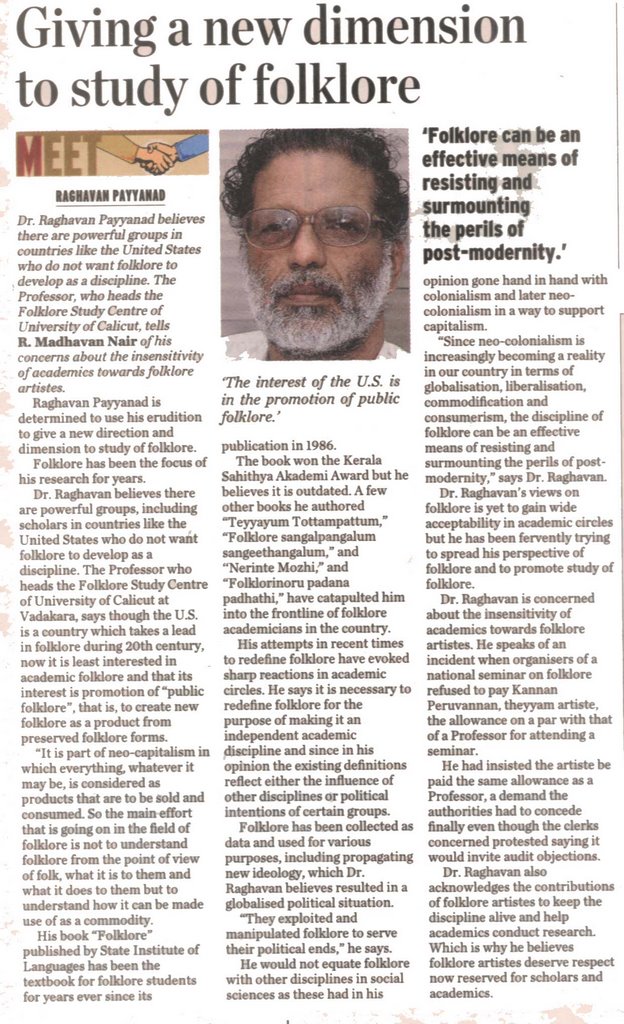
Kerala Folklore against US Imperialism,Bravo


The following is an item appeared in The Hindu dated 9 July 2006.


Giving a new dimension
to study of folklore

    Dr. Raghavan Payyanad believes there are powerful groups in countries like the United States who do not want folklore to, develop as a discipline. The Professor, who heads the Folklore Study Centre of University of Calicut, tells VL Madhavan Nair of his concerns about theinsensitivity of academics towards folklore artistes.

    Raghavan Payyanad is determined to use his erudition to give a new direction and dimension to study of folklore. Folklore has been the focus of his research for years. Dr. Raghavan believes there are powerful groups, including scholars in countries like the United States who do not want folklore to develop as a discipline. The Professor who heads the Folklore Study Centre of University of Calicut at Vadakara, says though the U.S. is a country which takes a lead in folklore during 20th century, now it is least interested in academic folklore and that its interest is promotion of "public folklore", that is, to create new folklore as a product from preserved folklore forms.

    "It is part of neo-capitalism in which everything, whatever it may be, is considered as products that are to be sold and consumed- So the main effort that is going on in the field of folklore is not to understand folklore from the point of view of folk, what it is to them and what it does to them but to understand how it can be made use of as a commodity. His book "Folklore" published by State Institute of Languages has been the textbook for folklore students for years ever since its 'The interest of the U.S. is in the promotion of public folklore.' publication in 1986.The book won the Kerala Sahithya Akademi Award but he believes it is outdated. A few other books he authored "Teyyayum Tottampattum," "Folklore Sangalpangalum Sangeethangalum," and "Nerinte Mozhi," and "Folklorinoru padana padhathi," have catapulted him into the frontline of folklore academicians in the country. His attempts in recent times to redefine folklore have evoked sharp reactions in academic circles. He says it is necessary to redefine folklore for the purpose of making it an independent academic discipline and since in his opinion the existing definitions reflect either the influence of other disciplines or political intentions of certain groups. Folklore has been collected as data and used for various purposes, including propagating new ideology, which Dr.Raghavan believes resulted in a globalised political situation.” They exploited and manipulated folklore to serve their political ends," he says.

    He would not equate folklore with other disciplines in social sciences as these had in his 'Folklore can be an effective means of resisting and surmounting the perils of post-modernity/opinion gone hand in hand with colonialism and later neo- colonialism in a way to support capitalism. "Since neo-colonialism is increasingly becoming a reality in our country in terms of globalisation, liberalisation, commodification and consumerism, the discipline of folklore can be an effective means of resisting and surmounting the perils of post-modernity," says Dr. Raghavan.

    Dr. Raghavan's views on folklore is yet to gain wide acceptability in academic circles but he has been fervently trying to spread his perspective of folklore and to promote study of folklore. Dr. Raghavan is concerned about the insensitivity of academics towards folklore artistes. He speaks of an incident when organisers of a national seminar on folklore refused to pay Kannan Peruvannan, theyyam artiste, the allowance on a par with that of a Professor for attending a seminar.

    He had insisted the artiste be paid the same allowance as a Professor, a demand the authorities had to concede finally even though the clerks concerned protested saying it would invite audit objections.

    Dr. Raghavan also acknowledges the contributions of folklore artistes to keep the discipline alive and help academics conduct research. Which is why he believes folklore artistes deserve respect now reserved for scholars and academics.

    04 July, 2006

    FOLKLORE CONGRESS at SHILLONG

    ifc Indian Folklore Congress

    Prof. Jawaharlal Handoo

    President

    Dear Friend: June 13, 2006

    It gives us immense pleasure to inform you that the Indian Folklore Congress [IFC] is organizing the 29th session of the Congress in North-Eastern Hill University [NEHU], Shillong, Meghalaya from September 20-22, 2006 in Shillong. The Congress is being organized in collaboration with NEHU, and the North-East Council [NEC]. The local Secretary of the Congress is Dr. Desmond Kharmawphlang (Centre for Cultural & Creative Studies, Bijni Complex, NEHU, Laitumkhrah, Shillong. E-mail: desmond_kharmawphlang@hotmail.com. Phone / Fax: 0364-228712/ 2223780).

    We understand that the host agency represented by Dr. Desmond Kharmawphlang has already sent you the first circular inviting you for participation in the Congress. To make sure that every member of the IFC receives the invitation without fail, the secretariat of the IFC decided to issue its own circular and here it is.

    You can also contact the President of the IFC (Prof. Jawaharlal Handoo. 1103 C-D Block. Udaya Ravi Road. Kuvempu Nagar. Mysore 5700 23. Phone/ Fax: 0821-2560433. E-mail: jlhandoo@dataone.in for more details.

    The main theme of the Congress is: Oral discourse and ancient knowledge in Northeast India. The sub-themes are as follows:

    1. Historical space and oral tradition
    2. Marginalization and folklore
    3. Displacement, migration, and oral discourse
    4. Palace paradigm and discourse in India
    5. Oral discourse and representation: voice of the voiceless
    6. Documentation of folklore
    7. Ecology, modernization and folk discourse
    8. Status of folklore in the academics of Northeast
    9. Folk narrative discourse and social identity

    We would like to take this opportunity of inviting you to participate in this Congress and in its deliberations. We expect you to present a paper on any aspect of folklore studies related to the above themes. You will have 20 minutes for your presentation followed by 5 minutes for the discussion if any. We therefore request you to send a one-page abstract of your paper to Dr. Desmond Kharmawphlang [send a copy to the President IFC on <jlhandoo@dataone.in>] on or before August 15, 2006, so that it is included in the book of abstracts. Your full paper should reach Dr. Desmond Kharmawphlang before September 5, 2006. The official language of the Congress is English. We request you to send your e-mail address/phone number with area code/cell phone number and fax number if any. Send this information on the top of the abstract copies

    Arrangements for your stay will be made in the University Guest House. The hosts of this Congress will be glad to provide you modest local hospitality which includes room, meals etc. for the entire period of your stay in Shillong. The Indian Folklore Congress, however, has no funds to offer you for meeting your travel expenses. We request you to find support for your travel from your own institution or your own resources. This circular is valid for making such request to your university / institution or the funding agency.

    September is very pleasant but a little cooler in Shillong, therefore light warm clothing is recommended.

    The nearest rail station and the airport for Shillong is Guwahati. Shillong is three hours drive from Guwahati. Fast taxi and bus services are available from the airport and the rail station. Dr. Desmond will be glad to help you with more information on travel and arrangements when you get in touch with him.

    The Registration fee for participation in this Congress is Rs. 300.00. The fee will be collected on spot. We would also like to request you to renew your membership of the IFC either before arriving in Shillong [send the membership fee in the name of Indian Folklore Congress by DD to Dr. Anjali Padhi, Nandigosh, P.O. Khariar. Distt. Naupada. Naupada 119501. Orissa]. Or pay immediately on arrival in Shillong.

    We also seek your cooperation in selecting the venue for the next congress. We request the respected members to come prepared with an invitation if they have the desire and the facilities for hosting the next congress of the IFC in their own areas.

    We look forward to hearing from you and welcoming you in Shillong.

    Yours sincerely

    Jawaharlal Handoo Kishore Bhattacharjee

    President IFC Secretary IFC

    1103 C-D Block Kishore Bhattacharjee

    Udaya Ravi Road Folklore Research Department

    Kuvempunagar Gauhati University

    Mysore 570023 Guwahati 781014. Assam

    Phone: (0821) 2560433 Phone: (0361)-2544370

    Mobile: (0) 9844089146 E-mail : bhattkishore@yahoo.co.uk

    E-mail: jlhandoo@dataone.in

    02 July, 2006

    I.S.T.R.Conference at Jaipur

    III International Conference of Indian Society for Theatre Research

    THEATRE AND DEMOCRACY

    Jointly organized by
    Department of Dramatics
    &
    Department of Modern European Languages,
    University of Rajasthan, Jaipur (Rajasthan)

    January 4 – January 6, 2007

    CALL FOR PAPERS


    Theatre communicates with people directly, and that too, much more than any other literary form. The audience response to it has always been emotive and involving. This reflects largely on the fact that, 'Theatre pre-supposes the presence and participation of the people'. All literature and art is about the people as well as for the people (as recipients, appreciators as well as catalysts for social change), but at the same time it is also true that no other genre of literature/art is as much people-centric as drama. It has always been a medium of Popular Public Expression. It is this interrelationship between people and theatre, which elevates drama to a creative applied medium and saves it from being condemned to bookshelves. This calls for a continuous process of regeneration, growth and development of theatre, which by the very process of creation and presentation is essentially democratic and relates itself to democracy (not as a politico-electoral process) as a system that gives birth to, and promotes a new set of values. They are by their very nature bulwark against obscurantism, fascism, racism, and aiming at fostering equity and justice, rationality and respect for new ideas spirits of inquiry and wedding to truth.

    The birth of Democracy, as an antithesis to the feudal order in the past, gave rise to a new form of social and political order. The new political order was largely progressive. The class set-up changed drastically, and so did their inter-relationships.

    The popular theatre of Europe coupled the two forms of political and social order. It celebrated the heroic qualities of the lords and the kings, but at the same time also showed the process of their decay, degeneration and (imminent) downfall. Also, the Elizabethan drama introduced elements that could be called democratic. Shakespeare, at times may have vacillated between change and changelessness, between the desirability of change and the fear of change. Such a practice largely influenced the Indian theatre epitomized in the Parsi Theatre, especially when all the art forms were rallying against the colonial rule.

    All major dramatists tried in their works to deal with the issues that are thrown-up by the new social and political order with all its concomitant pressure. They dealt dramatically with the relationship of man and society and the mobility of man to reach the level of self-fulfillment unless a specific form is given to a democratic order.

    Today, the notion of democracy and the practice of theatre has become an ancient phenomenon in India, but the challenges of the contemporaneous demand the theatre to assume a greater significance. Racism, communalism and blatant attempts at establishing hegemony through unbridled globalization, democracy and democratic institutions, indigenous cultural ethos, the right to hold a view opposed to the hegimonistic neo-imperialistic stance and perception are too serious and ominous signals to be ignored and unheeded.

    In view of the above, papers are invited to examine the Indian theatre scene under the umbrella of globalization with primary focus on paradoxes of democracy and it's Diasporas as well as the following issues which come in the fore ground and need to be discussed thoroughly and seriously:

    Theatre and the Politics of Globalization
    Theatre for Tomorrow
    Theatre of Democracy: Cross-sectional Analysis
    The Future of Freedom and Paradoxes of Theatre
    Theatre under the Quest of Secularism
    Democracy, Social Change and Theatre
    The Victim of the Experiments in Democracy
    Frontline of Terrorism and Indian Theatre
    Gender Issues in Indian Theatre: Desperately Seeking Democracy
    Indian Democracy and Theatre: Meaning and Practice

    Format for Proposals

    Proposals are invited for presentation in the general conference and for the Research Scholars’ Forum dealing with the subject. Papers must be no longer than twenty (20) minutes. Research Scholars may also submit short proposals for 10-minute papers on their research for presentation in specially organized sessions.

    All proposals should contain: author; title; 200-250 word abstract; intended audience [i.e., General Conference, or Research Scholars Forum]; indication of technical facilities; brief biographical note on the author; full postal address; fax number and e-mail-address. The format for proposals should be sent by electronic mail at dramatics@uniraj.ernet.in along with a hard copy by fax or post to the Conference Office given below.

    Deadline for submitting the abstract: 15 September 2006

    Scrutiny of Abstracts and Acceptance Letters:
    To maintain the academic standard of the conference, the Organisation Committee has decided to scrutinize all the abstracts. Acceptance Letters along with the Registration Forms will be sent electronically after the scrutiny of abstracts before 15 October 2006.

    Deadline for Registration: 15 November 2006

    CONFERENCE FEE:

    Before 15 November:
    General Participants: INR 1250
    Research Scholars: INR 750
    International Participants: USD 60

    After 15 November:
    General Participants: INR 1500
    Research Scholars: INR 1000
    International Participants: USD 75

    The conference fee includes book of abstracts, access to all conference sessions, reception and refreshment breaks during the 3 days of conference, breakfast, lunch and dinner.

    Traveling Allowance:
    Due to financial constraints, the request to provide traveling allowance cannot be entertained.

    Contact:
    Dr. Ravi Chaturvedi, Coordinator, Department of Dramatics, University of Rajasthan
    JAIPUR – 302004 Phone: 0141 2702639 Fax: 0141 2653883
    Email: dramatics@uniraj.ernet.in

    Images of Mayyazhi

    SOCIETY, IDENTITY AND FOLKLORE:
    IMAGES OF MAYYAZHI


    Dr.Mahesh Mangalat*

    INTRODUCTION
    Mahe is a small town, geographically located in the South Western region of the Indian peninsula, on the coast of Arabian Sea. With the advent of the French colonists to the town in 1721, for building warehouses, it began developing a distinct identity of its own. This sparsely populated hamlet was then dotted with hillocks and was under the governance of the local rulers, Vatakara Vazhunnavar. The region came to be known as Mahe or Mayyazhi only when it came under the rule of the French. Mahe became independent in 1954, as a culmination of popular struggle for freedom. Today the town comes under the jurisdiction of the Union Territory of Pondicherry. Pondicherry occupies a unique position among the states of Indian Union. It is multi-lingual and has its four constituent parts located in three states. The towns of Pondicherry and Karaikal in Tamil Nadu, Yanam in Andhra Pradesh and Mahe in Kerala, give the Union Territory a multi-cultural identity. This paper aims at examining as to how the identity of Mahe in post-independent period had been constructed. The paper also attempts to examine as to how folklore performs an ideological function when it gets harnessed for the creation of the identity of Mahe.

    THE DISTINCT IDENTITY OF MAHE
    The renowned novelist M.Mukundan1, in his Preface to the history of Mahe2, tries to examine as to what distinguishes Mahe from the other regions. His views can be summarised as follows:
    1. Neither topographical features nor the past history of colonial rule makes Mahe a town with a distinct identity. There are many places which have similar features.
    2. M.Mukundan says: “Perhaps the place has some magical facade which can not be explicated with reason. It is a hypnotic town. We experience it as if it were a dreamland in a fairy tale”. (P.7)
    3.”Mahe exists before us as an ordinary little town, rid of all its past splendour and magic” (P.8)
    4. The stories and myths about Mahe’s past reminds us of the ethos in the novels of Marques or Llosa (P.9). So, an ordinary writer would not be able to write its history.

    A review of these comments would reveal the following ideas:
    1. Even though Mahe is a region where a market with brisk trading activities and apparent change and progress after independence are found, the “real Mahe” could not be discerned anywhere as of now.
    2. The Identity of Mahe has a magical spell. It is similar to the ambiance that we come across in the novels of Marquez and Llosa.
    3. It is ancient tales and myths that formulate the identity of Mahe. This provides the rationale for the discussion on the identity of Mahe at a discourse on folklore.

    MAHE AND THE FOLK
    M.Mukundan, one of the prominent modernist writers, belongs to Mahe. Whenever he explains the distinct identity of Mahe, he uses the first person plural like “We” or “Our”, instead of first person singular, “I” or “Me”. This indicates that the question that the writer addresses is rather related to the popular consciousness than his own conceptions on the subject.
    The present day society which lives within the geographical territory of Mahe and sharing similar ideas and a common conscious ness can be defined as a Folk following the prescription of Allen Dundis3. This folk look upon their regional identity as something where history and myth are interwoven and believes that these are indistinguishable in their past and present. On account of this, the problematique of the folklore that constructed the identity of Mahe is characterised by an integration of different historical epochs effected through folkloristic imagination.

    HISTORY AND THE FOLKLORE
    Mahe at the time of the advent of French had just then been assuming the form of a settlement. P.C.Karunan4, a local historian had recorded that Mahe was then a settlement that surrounded the Puthalam Kavu. Tholan Mooppan is said to have been the founder of this settlement and Puthalam Kavu, as well. There were ballads that narrated the exploits of Tholan Mooppan. In fact, as apart from his identity in the ballads, he had been a favourite Theeya village leader, to the French. He was responsible for building rapport with the French rulers and the local populace.
    In M.Mukundan’s masterpiece, Mayyazhippuzhayude Theera ngalil (On the Banks of Mayyazhi River), Mahe forms the physical backdrop, as the title of the work suggests. In the sequel to the novel entitled Deivathinte Vikrithikal (God’s Mischiefs), the author presents a Kavu, which could be inferred as the Puthalam Kavu, when a reader draws details presented in the novel and relates it to the local history . The novelist calls it Aadi Theeya Kshethram (the temple of Primitive Theeya or Ancestral Theeya) .Tholan Mooppan is the Primitive Theeya of the regional history. Another creation of the author, a character in the novel, Alphonsachan, a magician of Eurasian origin, requires our attention at this point. This character calls himself the creator of Mahe. He could fly through the skies on the wings of ganja and could recast lives of many other characters in the novel by his magic.

    MAHE THE REAL AND CONSTRUCTED
    M.Mukundan’s novels have captured popular attention by their ingenious application of myths and lores. Mayyazhippuzhayude Theerangalil, is his first novel to utilise the backdrop of Mahe in its real name and it is also the most captivating among his works. Korumbiyamma, the grandmother character in the novel, narrates to her grandchildren the tales of Mahe. U.A.Khader, another novelist is popular for his recreation of folk tales in its real flavour. But, Mukundan’s creations stand apart by their philosophical preoccupation, regarding life. Mukundan had been a votary of existential modernism. One myth that is presented in Mayyazhippuzhayude Theerangalil regards the popular Velliankallu (Silver Rocks). It is actually a natural rock formation found in the Arabian Sea, where the fisherfolk go to catch fish. The dragon flies found on the rock are insinuated as souls of the people of Mahe. When one is born in Mahe, it is the soul that arrives from the Silver Rocks. When one dies the soul returns to the rock. The myth about the Rock as a resting inn of the souls during the interval between deaths and rebirth is an idea or an individual contribution made by the author. The stories told by Korumbiamma, the implied author, are in fact those crafted by the writer. What remain real are the geographical territory and its real name, Mahe, which the author utilises as the backdrop for his narratives. Author attributes an aura over the land through incidents in the novel, which has a magical spell similar to folktales. In almost all regional novels the writers create such a facade through the recreation of tales about a super realty. Gabriel Garcia Marquez and Mario Vargas Llosa are the best models found in world literature today, in this regard. The reference made by the writer about these authors while discussing the identity of Mahe and its magical spell can not be ruled out as incidental, in such a context.
    The dawn of modernism in Malayalam Novel comes with O.V.Vijayan’s novel Khasakhinte Ithihasam (The Legend of Khasak), which is very much cast as a regional novel. Earlier to this, Jnanpeeth winner author S.K.Pottekkad had published his Oru Desathinte Katha (Tale of a Village). In addition these, the novels, Smarakasilakal (Memorial Stones- Punathil Kunhabdulla), Ennappadam (Oil Field- N.P. Mohammed), Thrikkottoor Kathakal (Lores of Thrikkottoor - U.A.Khader), Aalhayude Penmakkal (Daughters of Aalaha - Sarah Joseph) have portrayed the mysterious aspects of the life within their respective locales. All these novels are read as literary texts and have not been treated as local history. M.Mukundan’s novels have been considerably successful as it appropriated the construction of a regional identity. In other words, fiction written by a contemporary writer is being treated as local history and the foundation for a constructed identity. Keeping this in mind, Mukundan himself has said once in an interview: “There are two mayyazhis One created by god and the other created by myself”. Alphonsachan of Deivathinte Vikrithikal, a creation of the author, also calls himself as the creator of Mahe.
    Identity is an ideological construct. As such, a regional identity could also be viewed as an ideological construct. The term ideology has been explicated as either a complex system of ideas or as a false consciousness (S.S.Sreekumar5).The construction of Mahe’s identity could be interpreted in both these senses. It could be examined as to what are the conceptual constituents of the identity of Mahe and to what extent false consciousness is celebrated as identity.

    THE NECESSITY FOR IDENTITY
    The beginning of the quest for a distinct identity of Mahe could be ascertained and reconstructed on the basis of certain relevant records. Though Mahe became independent in 1954, it is only in 1964 that Mahe and other erstwhile French territories in India were brought under the jurisdiction of the Union Territory Bill. Had that bill was not passed Mahe would simply have become a part of Kerala on the basis of Linguistic division of states. Pondicherry and Karaikal would have been included in the Tamil Nadu and Yanam would have been with Andhra Pradesh on the basis of their respective linguistic identity. The accord signed by France and India at the time of independence suggests that the former French areas in India should be retained as separate territories to provide scope for protection of its unique cultural milieu. It is the reason for keeping the territories which are located in three linguistic states, having diverse cultural and political past, together as a single administrative unit. Mahe and the other towns started developing tremendously as markets with the tax exemptions for the union territories. The concept of distinct cultural identity for Mahe gets strengthened within the context of expanding markets and trade relations. The tax structure in a Union Territory and a state has been always different. The difference has paved way for flourishing markets in these locales than the neighbouring towns in States. In the case under review, items, which could be procured at a cheaper price, include alcohole, which was often attributed as an icon of French connection. Goa also is popular for the distilleries and their special brews such as fenny. It happened to be another Union Territory and an erstwhile Portuguese territory in India. As a flourishing market, the appearances of the town, lifestyle and the presence of a large floating population delineated Mahe from its past and from the neighbouring towns in Kerala, situated within 10 or 15 kilometres. The new halo of low-priced market draw people from nearby as well as far away places to Mahe. It was at this point of time that M.Mukundan’s Mayyazhippuzhayude Theerangalil was serialised in Mathrubhoomi weekly, one of the elitist literary magazine in Malayalam. The literary quality of the novel was responsible for its success.
    In Mayyazhippuzhayude Theerangalil, the novelist portrays a time span beginning from the tranquil Mahe under French rule to the turbulent days of freedom struggle. The novel concludes when the soul of Dasan, the protagonist, returns to Velliankallu. To build up a suitable ambiance for the narrative, the novelist has used French names of streets which were never used by the local people, but for the official French documents. Eurasian characters in the novel have their fate cogitated to Mahe and the stories that Korumbiyamma tells her grandchildren reflect the philosophical preoccupation of the novelist. Alongside the myths surrounding the Velliankallu and other signifiers, Mayyazhippuzhayude Theerangalil could create an enduring impression of Mahe, in the mind of readers. It was as compelling as to displace the historic past and to substitute it with the creation of a contemporary writer. There is hardly any other instance in Malayalam, similar to any other work of art. Displacing the historicity of the land was instrumental in casting a unique identity for the place. As far as any writer is concerned the recognition he gets for the stories and characters is something that he looks forward to. For that reason the author of Mayyazhippuzhayude Theerangalil considering the image that he created as real setting can be understood and appreciated.
    The authentic constituent aspects considered for a distinct identity for a place can be listed as language, lifestyle, customs, rituals and cultural expressions. Mahe does not remain unique in these aspects in relation to the neighbouring towns of Kerala. The novelist does admit the fact in his prefatory remarks to the history of Mahe. However, the distinct identity of Mahe is often talked about by certain sections of the society. For example the leader of Traders Association once argued that Mahe should remain a part of Pondicherry to retain its distinct cultural identity to posterity. He further argued in a televised interview that, in order to be with Pondicherry, he is willing to accept Tamil as his own language. This declaration points towards the ideology of regional identity and the economic norm that are upheld by the exponents of distinct identity. As constituents of the identity they would talk about Velliankallu, Koyyethippovu (May Flower, which was referred to in the novel ) and the French names to the streets, which we see again in the novel.

    FOLKLORE AND IDENTITY
    When we look at the society of Mahe as a folk, it becomes clear as to how folklore is utilised by a contemporary society for the construction of an identity of its own. As seen in the earlier part of the present paper, folklore is used as a channel that integrates the process of constructing the identity. Folklore lets it to relate their identity to past. As M.Mukundan says the stories and myths about Mahe’s past reminds of the ethos in the novels of Marques or Llosa. The past in such a prescription is devoid of historicity. In the case we study, it is nothing but folklore. Past incidents are freely mixed with imaginative stories and tales. Creation of a contemporary writer is not differentiated with the lore of the folk. In other words, the lore of the present day folk is an amalgamation of real as well as created. The hesitation of the folk to accept history as their past and their fretfulness to embrace fictional elements to rationalise their contemporary existence, is the paradigm that lets folklore the foundation for construction of an identity. A modern novel despite its philosophical preoccupations becomes a noteworthy model for a contemporary folk’s adaptation as its lore6. As an ideology contemporary literature as well as folklore plays complimentary roles in the process of construction of identity of present day folk.

    REFERENCES
    1. Mukundan,M., 1987, Avatharika, Mayyazhi (Malayalam), Book Square, Mahe
    2. Gangadharan,C.H., 1987, Mayyazhi (Malayalam), Book Square, Mahe.
    3. Dundes,Alan.(Ed.),1965.Study of Folklore, Eagle Wood Cliffs; Printice Hall.
    4. Karunan,P.C.,1978.Mayyazhi Puthalam Bhagavathi Kshethram, (Malayalam) Jawaharlal Nehru High School Diamond Jubilee Souvenir, Mahe.
    5. Sreekumar,S.S. 2000, Prathyasasthra Parayanangal (Malayalam), Book Worm, Trissur.
    6. Mahesh Mangalat,2001.Oru Puzhayum Desa Swatwathinte Roopaval kkarananvum,Asaya Samanwayam,Kozhikode.


    *Dr.Mahesh Mangalat teaches at Mahatma Gandhi Govt.Arts College,Mahe under Pondicherry administration, affiliated to Pondicherry University. He is currently President of Kearala Society for Folklore Research and Kearala Society for Theatre Research.

    Paper presented at 23rd INDIAN FOLKLORE CONGRESS
    DEPARTMENT OF PUNJABI STUDIES,
    GURU NANAK DEV UNIVERSITY, AMRITSAR.
    24 – 26 MARCH 2004